
 English
 Español
Why Elevated Noise Barriers Are Getting More Attention Than Ever?
If you talk to people living near highways, railways, or elevated roads, one complaint comes up again and again. The noise never really stops. It is not just loud. It is constant. This is where elevated noise barriers quietly enter the conversation.
Unlike ground-level barriers, elevated noise barriers are designed to work where traffic runs above the surrounding environment. For manufacturers, this product is no longer just an infrastructure accessory. It is becoming a necessity in modern urban planning.
In simple terms, an elevated noise barrier is a sound control structure installed along elevated roads, bridges, viaducts, or rail lines. Its job is to reduce the amount of traffic noise that reaches nearby residential, commercial, or sensitive areas.
Because these barriers sit at height, they are built differently from roadside barriers. They must deal with wind load, vibration, limited installation space, and long-term exposure without relying on ground support.
The main difference is not the material alone. It is the structure. Elevated noise barriers are usually mounted directly onto bridges or elevated road edges, which means higher safety and engineering requirements.
Urban development is pushing roads and railways upward. Elevated highways save space, but they also spread noise over a wider area.
People living several floors above ground are often more affected than those at street level. Complaints increase. Regulations tighten. Projects slow down if noise control is ignored.
From a government and contractor perspective, elevated noise barriers are often required to meet environmental standards. From a manufacturer perspective, demand is being driven by compliance, not decoration.
These systems are not installed everywhere. They appear in very specific scenarios.
Dense cities with limited land rely heavily on elevated roads. Noise barriers help protect nearby apartments, offices, and schools.
High-speed trains on elevated tracks generate strong rolling and aerodynamic noise. Elevated barriers are often the only practical solution.
These areas combine traffic density and height. Without barriers, noise spreads in multiple directions.
Hospitals, residential complexes, and educational facilities are common locations where elevated noise barriers are prioritized.
Many people assume noise barriers simply block sound. In reality, it is a mix of blocking, absorbing, and redirecting sound waves.
The barrier surface reflects noise back toward the road instead of letting it spread outward.
Many designs include absorptive panels that reduce echo and secondary noise.
The barrier height and tilt are carefully calculated. Even small changes can significantly affect performance.
Because these systems are elevated, vibration resistance is critical. Poor structural design can reduce both safety and noise reduction effectiveness.
Material choice directly affects performance, durability, and cost.
| Material Type | Main Advantage | Common Concern |
|---|---|---|
| Metal Composite Panels | High strength and durability | Higher cost |
| Transparent Acrylic or PC | Light transmission and visibility | Surface scratching |
| Concrete Panels | Excellent noise blocking | Heavy weight |
| Absorptive Sandwich Panels | Balanced noise control | Complex structure |
No noise control solution is perfect. Elevated noise barriers come with clear benefits and real challenges.
For manufacturers, balancing performance, cost, and appearance is one of the hardest parts of product design.
Choosing an elevated noise barrier is not just about picking a panel type.
The barrier must integrate safely with the bridge or elevated structure. Load calculations are critical.
Different projects require different decibel reductions. Overdesign increases cost. Underdesign causes complaints.
UV exposure, rain, wind, and temperature changes all affect long-term performance.
Cleaning, inspection, and replacement should be considered during design, not after installation.
Noise standards, fire resistance, and safety codes vary by region. Compliance is non-negotiable.
Manufacturers are no longer supplying simple panels. They are delivering integrated systems.
This includes modular designs, lighter materials, improved absorption structures, and faster installation methods.
Ease of transport and on-site assembly has also become a key selling point, especially for large infrastructure projects.
Elevated noise barriers are not flashy products. Most people never notice them unless they are missing.
But when noise complaints rise, these structures suddenly become very important.
For manufacturers, the future lies in reliable performance, smart structural design, and real-world durability rather than marketing claims.
As cities continue to build upward, elevated noise barriers will move from optional add-ons to essential infrastructure components.
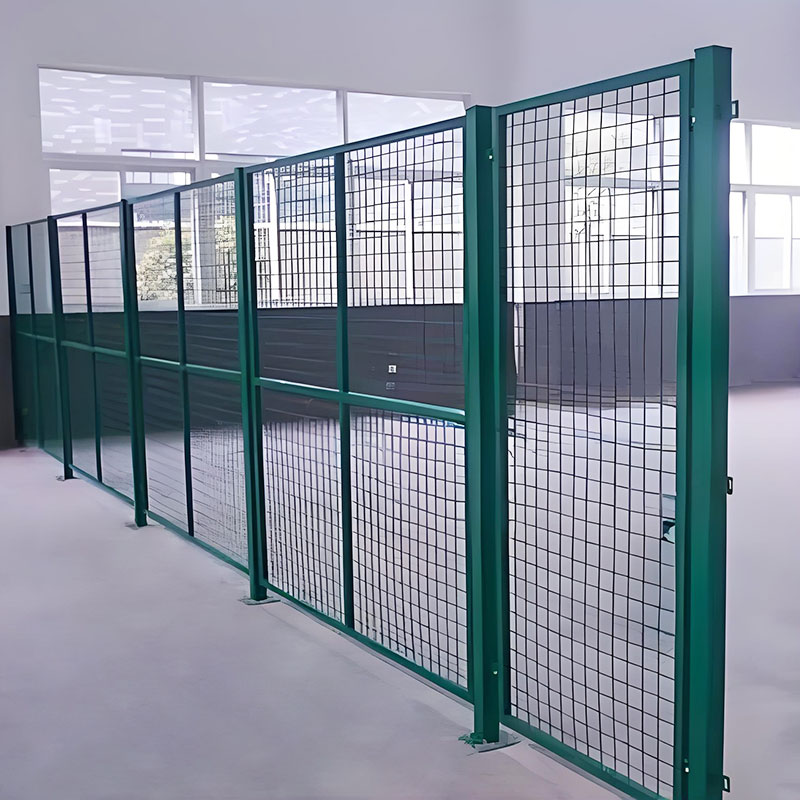
The workshop isolation net, also known as the warehouse isolation net, factory equipment protection fence, or factory workshop partition wire mesh, is...
See DetailsContact Us
Add:No. 577 Fuqiang Road, Panhuo Street, Yinzhou District, Ningbo City, Zhejiang Province
Email: [email protected]
Telephone: +86-18058271903
Phone: +86 0571-28284189

Zhenxuan Traffic Engineering Co., Ltd. is a large manufacturers of professional responsible for the design, production and sales of a series of guard rails, guard rails and high-speed soundproofing screens.
PRODUCT
case
 OEM/ODM Aluminum/Steel Guardrail Manufacturers
+86-18058271903