
 English
 Español
Metal bridge guardrail
Metal bridge guardrails are protective facilities on both sides of roads and rai...
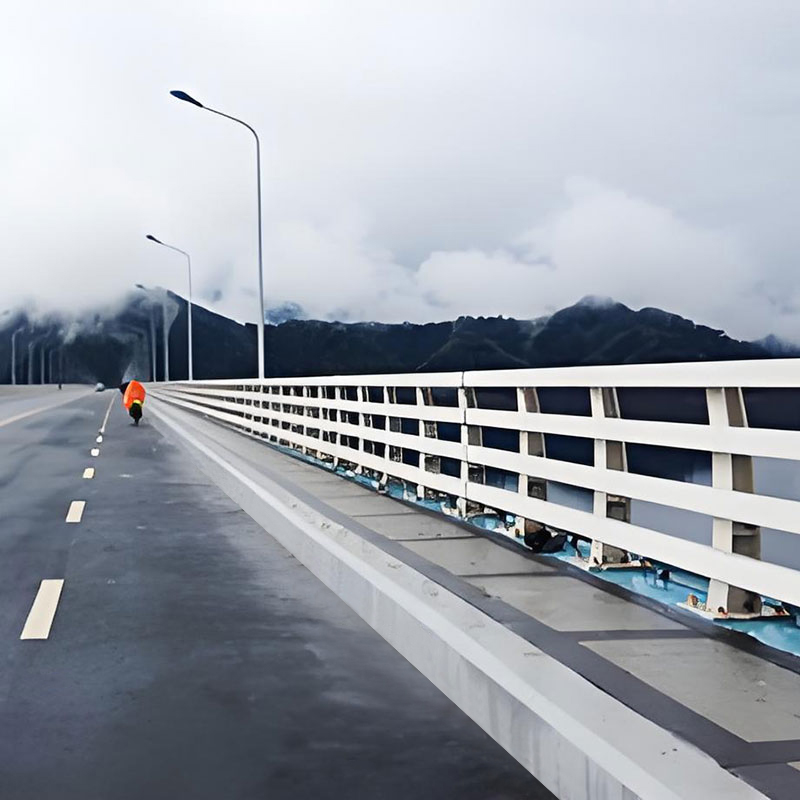
Metal bridge guardrails are protective facilities on both sides of roads and rai...
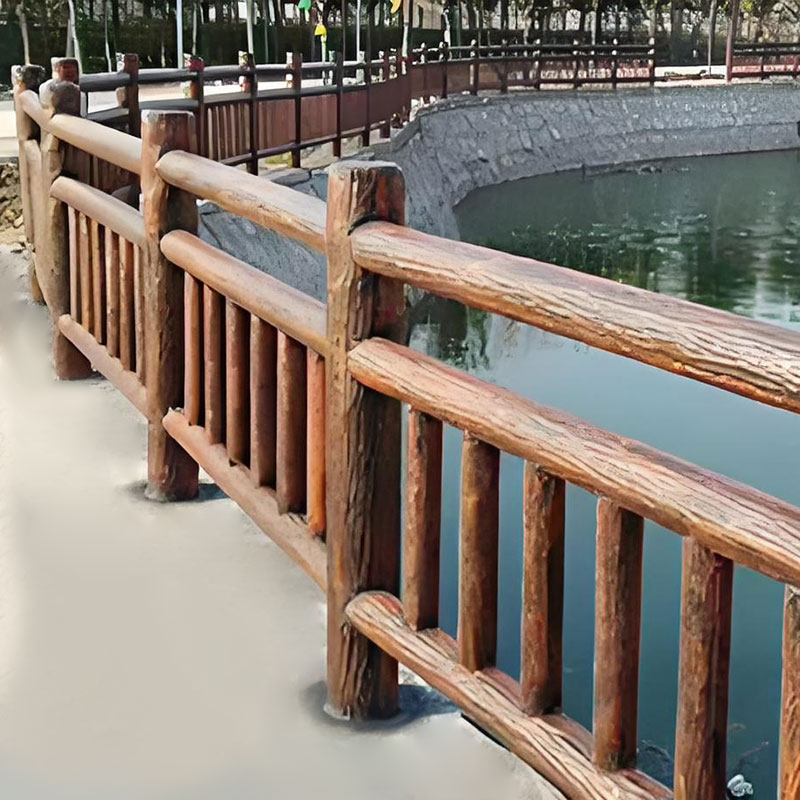
Imitation wood bridge guardrail is a kind of bridge guardrail made of reinforced...
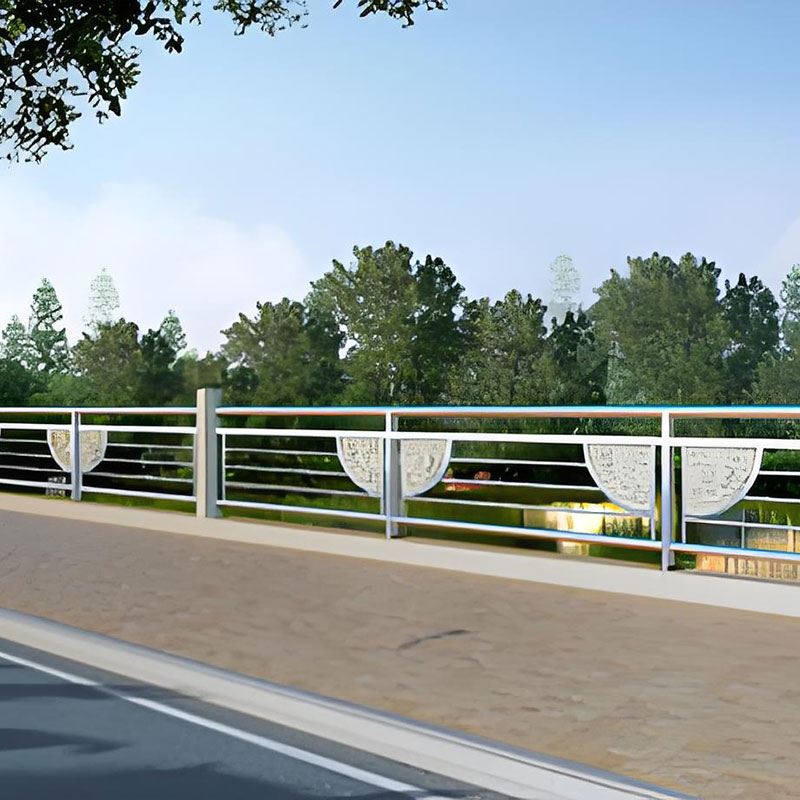
Imitation stone bridge guardrail is a kind of bridge guardrail that simulates th...
Bridge Guardrail is a traffic safety protection facility designed for structures such as bridges, overpasses, and piers. Because bridges are in a special traffic environment, bridge guardrails not only need to have high impact resistance, but also need to be able to adapt to severe weather and long-term use. Bridge guardrails provide strong protection for road safety. Through effective isolation, protection, and impact mitigation, they can prevent vehicles from running off the bridge deck, reduce the incidence of accidents, and minimize the injuries to drivers and passengers in accidents, ensuring smooth and safe traffic in the bridge area.
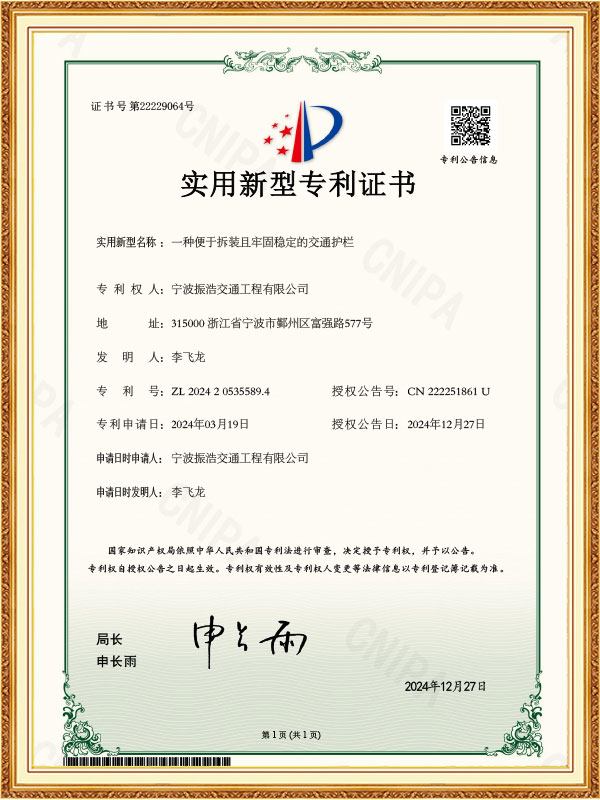
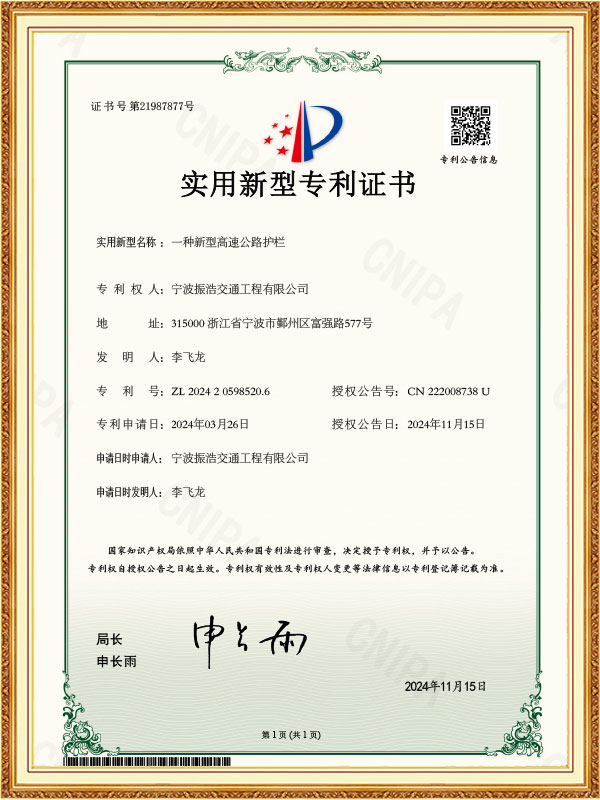
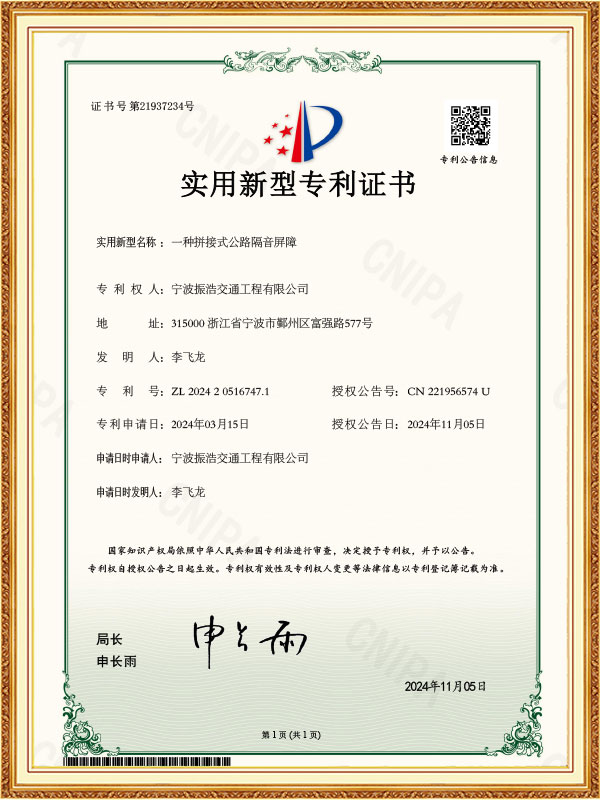
Zhenxuan Traffic Engineering Co., Ltd. is a large manufacturers of professional responsible for the design, production and sales of a series of guard rails, guard rails and high-speed soundproofing screens. As China Bridge guardrail Manufacturers and Bridge guardrail Suppliers, the company relies on high-speed guard board production equipment, the production quality meets national standards, and the product design is carried out using a computer...


A metal flood protection board is the most robust and reliable solution for preventing floodwater intrusion through doorways, entrances, and low-level openings. Unlike sandbags or plastic barriers, a properly engineered metal flood protection board system provides a demonstrable seal against water...
READ MORESpecifying a zinc steel fence guardrail provides municipal developers, industrial civil engineers, and premium estate managers with the ultimate equilibrium of structural yield strength, permanent electrochemical corrosion protection, and minimal long-term maintenance overhead. While alternative pe...
READ MORELearning how to build a wire mesh fence comes down to four fundamentals: set posts on a straight, correctly spaced line, unroll the mesh with steady tension, anchor it to every post without slack, and secure the ends with tension bars so the whole run stays tight for years instead of months. Mapp...
READ MORESelecting the right steel mesh fence manufacturer depends on balancing geometric rigidity against localized atmospheric corrosion. High-security infrastructure requires manufacturers utilizing heavy 4-gauge to 8-gauge wire with a minimum tensile strength of 500 MPa, combined with advanced Zinc-Alu...
READ MOREWhy is the Bridge Guardrail’s Role in Structural Containment Crucial for Preventing Catastrophic Accidents in Special Traffic Environments?
The Bridge Guardrail is a specialized and essential traffic safety protection facility, fundamentally different from its ground-level counterparts. Its deployment on elevated structures such as bridges, overpasses, and piers places unique demands on its performance, primarily due to the special traffic environment it serves. Failure of a bridge barrier does not merely result in a median breach; it often leads to catastrophic events involving vehicles plunging from significant heights, resulting in far greater damage and loss of life. Consequently, the engineering requirements for a Bridge Guardrail are focused intensely on providing strong protection for road safety through absolute containment and robust energy management.
The Imperative of High Impact Resistance
The distinguishing feature of the Bridge Guardrail system is its necessity for exceptionally high impact resistance. This requirement stems from two primary factors. First, bridges often carry high volumes of heavy truck traffic, which necessitates a barrier capable of containing larger masses and higher kinetic energies than standard highway rails. Bridge barriers are typically designed to meet or exceed high containment levels (such as Test Level 5 or 6 in global standards) which involve testing with large single-unit trucks or even tank trucks. The ability of the guardrail to withstand such forces is directly linked to its capacity to prevent vehicles from running off the bridge deck.
Second, the structural nature of the installation mandates minimal deflection. Unlike roadside guardrails, which can safely deflect several feet into a clear zone, bridge barriers have limited or no clear space behind them. Excessive deflection risks hitting the bridge’s structural elements, compromising the bridge’s integrity, or even striking pedestrians if a walkway is present. Therefore, the Bridge Guardrail must be designed to be rigid enough to absorb and dissipate the massive energy of vehicle impact within a very limited space. This is achieved through reinforced anchorage to the bridge deck, often involving sophisticated concrete embeds or steel connections that transfer the lateral load directly into the main structure of the bridge.
The design of the bridge barrier is a masterclass in compromise: it must be stiff enough to prevent vehicles from running off the bridge deck, yet flexible enough to manage the collision energy in a controlled manner to minimize the injuries to drivers and passengers in accidents. This balancing act is typically achieved by engineering a multi component system:
A Strong Structural Element: Often a concrete parapet or a deep steel beam that provides the primary restraint and containment function.
An Impact Interface: A smooth, continuous surface designed to redirect the vehicle upon impact, ensuring that the vehicle does not pocket or snag, which could lead to severe rotational forces or rollovers.
Anchorage System: The most critical component, transferring the collision force safely into the bridge deck without causing structural failure.
Effective Isolation, Protection, and Impact Mitigation
The function of the bridge barrier extends beyond simple containment; it provides effective isolation, protection, and impact mitigation.
Isolation: The guardrail creates a physical separation between traffic flow and the exposed edges of the bridge, preventing errant vehicles from exiting the roadway. It also provides a clear boundary for construction crews, maintenance staff, and pedestrians if the bridge includes non vehicular pathways.
Protection: By maintaining the integrity of the travel path, the barrier offers strong protection for road safety for all vehicles. Its continuous presence acts as a psychological deterrent and a physical guarantor against environmental hazards such as high winds, ice, or fog that are exacerbated in the special traffic environment of an elevated structure.
Impact Mitigation: The design geometry and material choices are optimized for controlled, non catastrophic energy dissipation. When a collision occurs, the system’s engineered yielding allows the barrier to absorb kinetic energy without transmitting dangerous peak forces back into the vehicle's cabin. This crucial function helps to reduce the incidence of accidents that result in severe injury or fatality. By controlling the post-impact trajectory and ensuring the vehicle leaves the barrier run at a shallow, stable angle, the Bridge Guardrail plays a significant role in ensuring smooth and safe traffic in the bridge area even immediately following a severe crash event.
The successful design and installation of a Bridge Guardrail system is thus foundational to the safety and longevity of the bridge itself, safeguarding it from the dynamic stresses of vehicular impact while offering the highest level of occupant protection available in the traffic safety protection facility sector. This relentless focus on structural integrity and performance under extreme conditions defines its indispensability.
How Do Manufacturing Quality, Durability, and Regulatory Compliance Guarantee the Bridge Guardrail’s Long Term Stable Operation?
The continued effectiveness of the Bridge Guardrail hinges not just on its initial design strength but on its ability to sustain that strength throughout years of exposure in a demanding environment. The inherent requirements of severe weather and long term use necessitate an unparalleled focus on material science, anti corrosion treatments, and stringent quality control during manufacturing. A structure that is expected to provide strong protection for road safety for 50 years or more must be engineered with durability as a core, non negotiable specification.
Challenges of Severe Weather and Long Term Use
Bridges are inherently exposed structures, presenting a far more aggressive environment for materials than standard roads. The Bridge Guardrail is subjected to unique long term stresses:
Extreme Thermal Cycling: Since they are not insulated by the ground, bridges experience greater temperature swings, leading to thermal expansion and contraction that stresses all components, including the rail, posts, and anchors.
Corrosion from Salt and Moisture: Bridge decks are heavily exposed to road salts used for de icing and constant moisture, leading to a much higher rate of corrosion. This mandates superior protective coatings, such as high specification hot dip galvanization or specialized polymer coatings, to ensure the rail maintains its high impact resistance for its entire service life.
Dynamic Loading: Constant vibration from heavy traffic creates fatigue stresses that can weaken materials and connections over time, making it essential that the initial design over compensates for potential material fatigue to ensure long term stable operation.
These environmental factors dictate that the manufacturing process must achieve a level of precision and material integrity that surpasses that of standard guardrail production. The commitment to production quality meets national standards is therefore not merely a compliance issue, but a functional necessity for the barrier to provide effective isolation, protection, and impact mitigation over decades.
The Role of Quality Manufacturing and Compliance
The consistency and reliability of a Bridge Guardrail begin on the production floor. As a leading example within the industry, Ningbo Zhenhao Traffic Engineering Co. Ltd., in its capacity as one of the specialized China Bridge Guardrail Manufacturers and Bridge Guardrail Suppliers, ensures that its manufacturing protocols are aligned with the highest standards of precision engineering. By relying on high speed guard board production equipment and ensuring the product design is carried out using a computer for precision modeling, manufacturers can guarantee that the critical dimensional tolerances and material strength are achieved for every piece. This advanced approach is vital to guarantee that the guardrail system, when installed on structures such as bridges, overpasses, and piers, performs exactly as engineered under crash conditions.
The material used must not only meet the required chemical composition for strength but must also accept and retain the anti corrosion treatment effectively. Inspection protocols during galvanization are particularly rigorous to ensure coating uniformity and thickness, which directly correlates with the guardrail's resistance to severe weather and long term use.
Standardization and Occupant Safety Performance
The ultimate purpose of the Bridge Guardrail is to minimize the injuries to drivers and passengers in accidents. This humanitarian objective is quantified through standardized testing and regulatory compliance. Every barrier system must prove its performance in full scale crash tests which measure three critical outcomes:
Containment Level: The ability to prevent vehicles from running off the bridge deck.
Redirection Stability: The smoothness of the impact and the trajectory of the vehicle after impact, preventing vehicle snagging or rollover.
Occupant Risk: Crucially, measuring the forces (accelerations) experienced within the vehicle's cabin during the collision.
The success of a bridge barrier system in these tests is what allows road authorities to confidently deploy it as a traffic safety protection facility that is certified to reduce the incidence of accidents resulting in catastrophic injury. The low friction and smooth profile are designed to shepherd the impacting vehicle back into the lane with the minimum possible deceleration force, which is the physical mechanism by which occupant injury is mitigated. This focus on controlled yielding, even within the confines of limited deflection space, is a testament to the sophisticated engineering behind the barrier.
In conclusion, the Bridge Guardrail is far more than a physical deterrent; it is a life saving kinetic energy management system deployed in the most challenging of transportation settings. Its design provides strong protection for road safety across structures such as bridges, overpasses, and piers, effectively managing the high risk posed by the special traffic environment. Its proven durability, high impact resistance, and continuous certification against rigorous national standards collectively ensure its long term stable operation, thereby reliably ensuring smooth and safe traffic in the bridge area for future generations. The integration of effective isolation, protection, and impact mitigation technologies confirms its role as a paramount infrastructure investment dedicated to minimizing harm and maximizing safety.
Contact Us
Add:No. 577 Fuqiang Road, Panhuo Street, Yinzhou District, Ningbo City, Zhejiang Province
Email: [email protected]
Telephone: +86-18058271903
Phone: +86 0571-28284189

Zhenxuan Traffic Engineering Co., Ltd. is a large manufacturers of professional responsible for the design, production and sales of a series of guard rails, guard rails and high-speed soundproofing screens.
PRODUCT
case
 OEM/ODM Bridge guardrail Suppliers
+86-18058271903