
 English
 Español
EVA rotating barrel guardrail
EVA rotating barrel guardrail is a traffic safety facility, mainly composed of c...
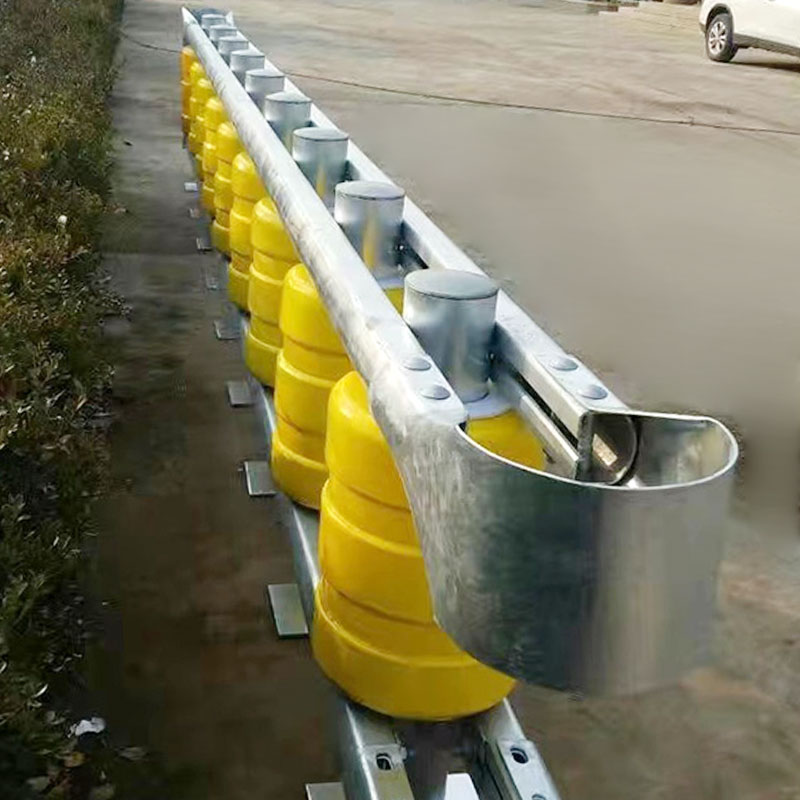
EVA rotating barrel guardrail is a traffic safety facility, mainly composed of c...
Rolling Barrel Guardrail is an innovative traffic safety protection facility suitable for high-risk road areas such as highways, urban roads and bridges. It adopts a unique roller design, which can effectively absorb and disperse the impact force when the vehicle collides, reduce the direct contact between the vehicle and hard objects, and thus reduce the damage caused by the accident. The design concept of the roller guardrail is to mitigate the impact force through its rolling structure, delay the vehicle's stop, and enhance the protection of the occupants.
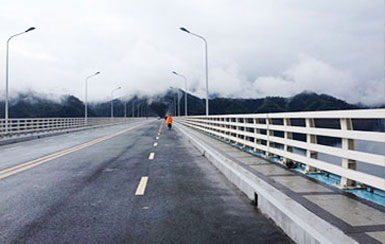
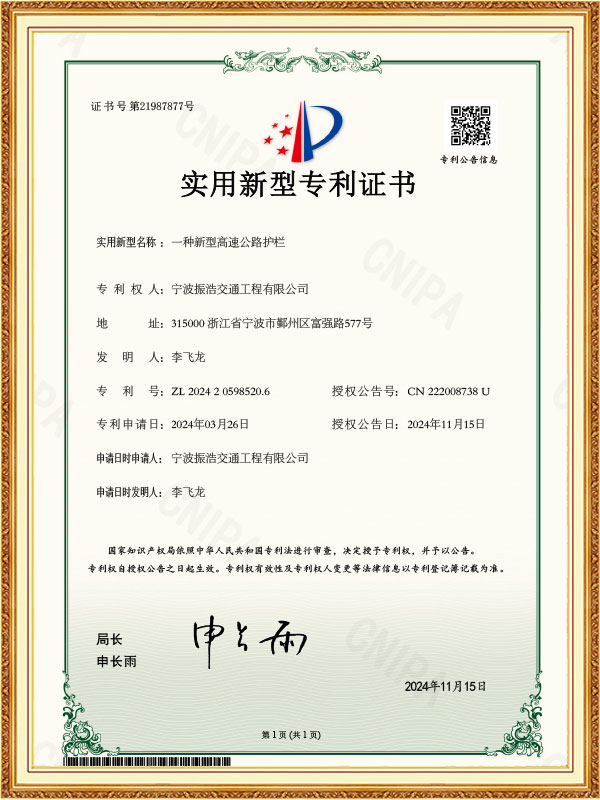
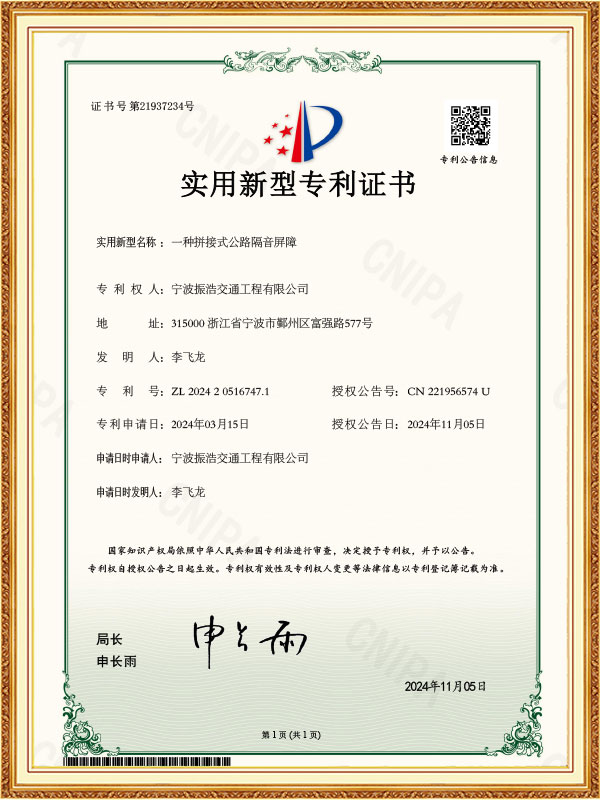
Zhenxuan Traffic Engineering Co., Ltd. is a large manufacturers of professional responsible for the design, production and sales of a series of guard rails, guard rails and high-speed soundproofing screens. As China Rolling barrel guardrail Manufacturers and Rolling barrel guardrail Suppliers, the company relies on high-speed guard board production equipment, the production quality meets national standards, and the product design is carried out using a computer...
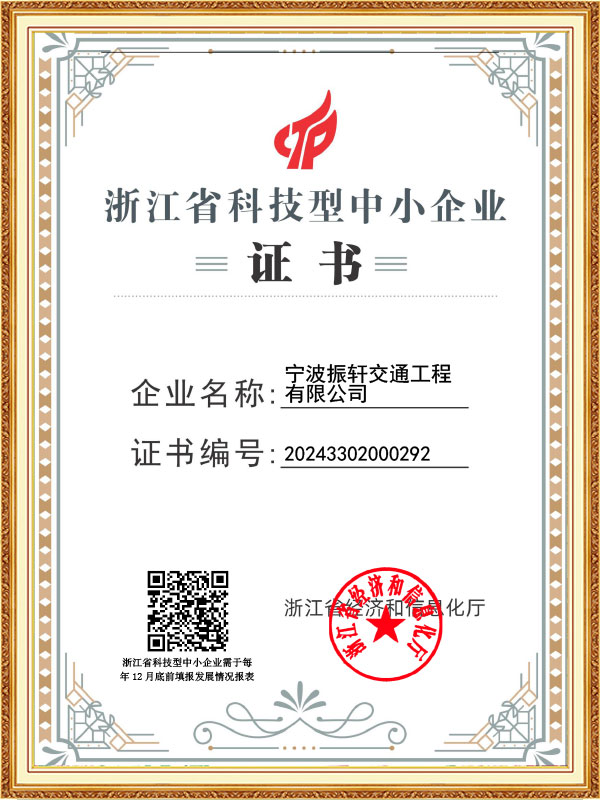

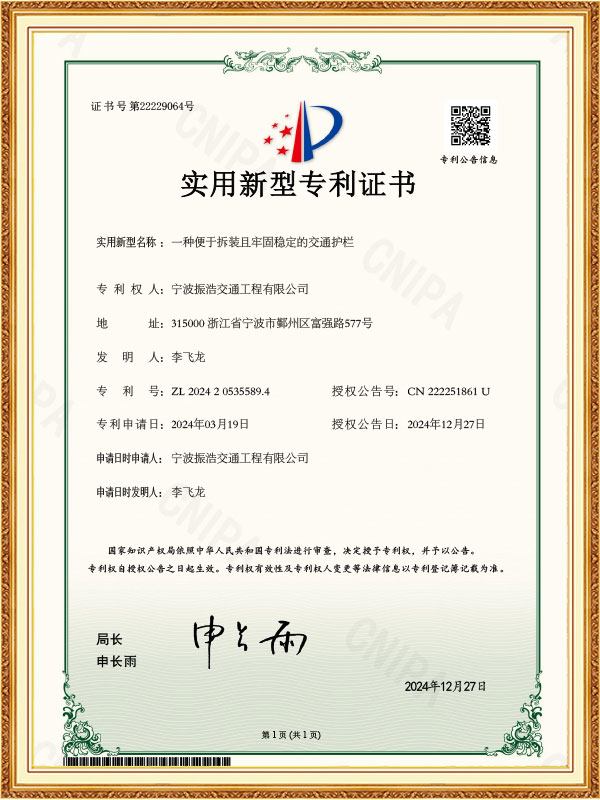
A metal flood protection board is the most robust and reliable solution for preventing floodwater intrusion through doorways, entrances, and low-level openings. Unlike sandbags or plastic barriers, a properly engineered metal flood protection board system provides a demonstrable seal against water...
READ MORESpecifying a zinc steel fence guardrail provides municipal developers, industrial civil engineers, and premium estate managers with the ultimate equilibrium of structural yield strength, permanent electrochemical corrosion protection, and minimal long-term maintenance overhead. While alternative pe...
READ MORELearning how to build a wire mesh fence comes down to four fundamentals: set posts on a straight, correctly spaced line, unroll the mesh with steady tension, anchor it to every post without slack, and secure the ends with tension bars so the whole run stays tight for years instead of months. Mapp...
READ MORESelecting the right steel mesh fence manufacturer depends on balancing geometric rigidity against localized atmospheric corrosion. High-security infrastructure requires manufacturers utilizing heavy 4-gauge to 8-gauge wire with a minimum tensile strength of 500 MPa, combined with advanced Zinc-Alu...
READ MOREHow Does the Unique Roller Design of the Rolling Barrel Guardrail Redefine Kinetic Energy Absorption and Vehicle Containment Dynamics?
The Rolling Barrel Guardrail represents an evolution in passive road safety infrastructure, moving beyond static containment to introduce dynamic kinetic energy management. This system is defined as an innovative traffic safety protection facility that fundamentally alters the collision experience. Unlike traditional steel or concrete barriers that rely solely on plastic deformation and friction to arrest vehicle motion, the roller guardrail system introduces a mechanical means of energy conversion. This distinction makes it highly suitable for high risk road areas including complex stretches of highways, urban roads and bridges where the severity of impacts tends to be higher due to speed or environmental factors.
The Mechanics of Dynamic Energy Dispersion
At the core of this system is the unique roller design. The bright, highly visible plastic barrels are freely rotating components mounted on a robust steel frame and post structure. When a vehicle collides with the guardrail, this design initiates a three tiered process of energy management that achieves the goal of providing an innovative traffic safety protection facility:
Translational to Rotational Conversion: The initial impact force, which is the vehicle's kinetic energy translating forward, is immediately met by the rollers. Instead of the vehicle abruptly decelerating against a static, hard surface, the energy is partially converted into rotational energy as the barrels spin along the axis of the guardrail. This action is the primary mechanism that allows the system to effectively absorb and disperse the impact force. By distributing the energy into a different physical dimension rotation, the peak force transmitted back to the vehicle is significantly reduced.
Controlled Redirection: The rolling action prevents the vehicle from snagging on the barrier. In traditional systems, snagging often leads to sudden, violent deceleration or even vehicle rollover, which is highly detrimental to occupant safety. The smooth, spinning contact surface guides the impacting vehicle, forcing it into a shallower redirection angle. This controlled channeling of the vehicle along the barrier is crucial for reducing the damage caused by the accident by mitigating the most severe outcomes like pocketing or vaulting.
Frame Deformation: While the rollers manage the initial impact and redirection, the underlying robust steel structure is still essential for ultimate containment. The steel posts and rails are designed to yield and deform plastically in a controlled manner, absorbing residual energy after the rollers have done their work. This two stage absorption process roller rotation and frame deformation ensures that the barrier can withstand severe impacts while remaining a contained system capable of preventing the vehicle from crossing into oncoming traffic or running off the structure.
Reducing Contact and Mitigating Force
The design is fundamentally focused on achieving two primary safety goals: to reduce the direct contact between the vehicle and hard objects and to mitigate the impact force through its rolling structure.
The reduction in direct contact is a critical factor in passenger protection. By providing a relatively low friction, yielding contact surface, the system minimizes the localized, high stress points that can cause catastrophic deformation of the vehicle's sheet metal and frame. Instead of a direct, blunt impact against a steel beam, the force is spread across the cylindrical roller surfaces, acting more like a dynamic cushion that gently guides the vehicle.
Furthermore, the process allows the system to delay the vehicle’s stop. In a collision, the severity of occupant injury is directly related to the rate of deceleration. A quicker stop translates to higher G forces, which are lethal. By leveraging the rotation of the barrels and the progressive yielding of the steel frame, the Rolling Barrel Guardrail extends the time duration over which the vehicle’s kinetic energy is bled off. This extension of the stopping time inherently lowers the average deceleration forces experienced by the occupants, which is a highly sophisticated method to enhance the protection of the occupants.
The deployment of this innovative traffic safety protection facility in high risk road areas is strategic. Locations such as sharp curves, steep embankments, median openings, and elevated sections of highways, urban roads and bridges require a guardrail that does more than just contain. It must actively manage the collision event to safeguard life, and the unique roller design provides that dynamic margin of safety, transforming a potentially catastrophic accident into a manageable, albeit severe, incident. The integration of rotation into the impact dynamic is truly a transformative concept in traffic safety engineering.
In What Ways Do Manufacturing Excellence and Material Science Ensure the Long Term Performance and Occupant Protection of the Rolling Barrel Guardrail?
While the core dynamic concept of the Rolling Barrel Guardrail relies on its mechanical interaction during a collision, the long term efficacy of this innovative traffic safety protection facility is entirely dependent on manufacturing excellence, material robustness, and strict adherence to global performance standards. A guardrail designed to effectively absorb and disperse the impact force must maintain its structural and rotational integrity over many years of exposure to environmental stressors.
The Imperative of Material Durability and Precision
The successful implementation of the unique roller design relies on two primary material considerations: the plastic polymer used for the barrels and the high tensile steel used for the supporting structure.
The rollers must be constructed from a highly durable, UV stabilized polymer that resists cracking, fading, and degradation under exposure to extreme temperatures, road chemicals, and continuous sunlight. If the plastic components become brittle or fail to rotate freely, the entire dynamic function of the guardrail is compromised, nullifying its ability to mitigate the impact force through its rolling structure. Therefore, material specification and quality control during injection molding are paramount. This polymer also often contains retroreflective elements or is highly pigmented to enhance visibility, especially in low light conditions on highways, urban roads and bridges.
Equally critical is the strength and corrosion resistance of the underlying steel frame and posts. The steel must possess specific yield and tensile strengths to ensure it deforms predictably and progressively under load, yet remains robust enough to contain the largest mandated test vehicle. Because these systems are frequently deployed in high risk road areas where environmental corrosion is a major issue especially bridge environments, the steel components typically undergo extensive treatments such as hot dip galvanization to ensure the production quality meets national standards for longevity. This meticulous approach to materials ensures the barrier’s foundational strength for the duration of its service life.
Manufacturing and Regulatory Compliance
The precision required for a system that must dynamically perform under milliseconds of extreme impact load is achieved through advanced manufacturing techniques. Companies that excel in this field, such as Ningbo Zhenhao Traffic Engineering Co. Ltd., one of the foremost China Rolling Barrel Guardrail Manufacturers and Rolling Barrel Guardrail Suppliers, understand that consistency is non negotiable. Their commitment to utilizing high speed guard board production equipment and ensuring the product design is carried out using a computer is essential. Computer aided design allows for precise structural analysis and the optimization of component geometry, ensuring that the critical clearances between the rolling barrels and the steel frame are perfect. This precision ensures that the barrels are truly free rolling, a necessity for the system to delay the vehicle’s stop efficiently and reduce the direct contact between the vehicle and hard objects.
Regulatory compliance is the definitive marker of performance for this innovative traffic safety protection facility. The guardrail must pass rigorous full scale crash tests often adhering to international standards such as NCHRP Report 350 or the Manual for Assessing Safety Hardware MASH. These tests confirm the system’s ability to:
Contain: Prevent vehicle penetration or vaulting across all tested weights and speeds.
Redirect: Ensure the post impact trajectory is shallow and stable, reducing the risk of secondary collisions.
Protect: Demonstrate low Occupant Impact Velocities and Ridedown Accelerations, which is the quantifiable measure of how effectively the system can enhance the protection of the occupants.
The successful passage of these tests is a validation that the unique rolling action truly helps to mitigate the impact force through its rolling structure and reduce the damage caused by the accident.
The Holistic Safety Benefit
The combination of dynamic function and robust manufacturing results in a safety system with a holistic benefit for high risk road areas. The ability to effectively absorb and disperse the impact force is not just about protecting the vehicle; it is primarily about preserving human life and minimizing injury severity. By engineering the impact duration and angle, the Rolling Barrel Guardrail system significantly lowers the forces acting on the human body during a crash. The consequence of this sophisticated design is a proven reduction in accident severity, making it an increasingly preferred solution for complex road geometry and elevated structures. The confidence derived from knowing that the production quality meets national standards allows road safety engineers to deploy this technology to enhance the protection of the occupants and create a safer traffic environment across highways, urban roads and bridges globally.
Contact Us
Add:No. 577 Fuqiang Road, Panhuo Street, Yinzhou District, Ningbo City, Zhejiang Province
Email: [email protected]
Telephone: +86-18058271903
Phone: +86 0571-28284189

Zhenxuan Traffic Engineering Co., Ltd. is a large manufacturers of professional responsible for the design, production and sales of a series of guard rails, guard rails and high-speed soundproofing screens.
PRODUCT
case
 OEM/ODM Rolling barrel guardrail Suppliers
+86-18058271903