Steel Mesh Fencing and Flood Control Boards Work Better Together Than Apart
Steel mesh fence and flood control boards serve different primary functions, but in modern perimeter protection and water management planning, they are increasingly deployed as a coordinated system. Steel mesh fencing provides structural containment, security zoning, and debris management during flood events, while flood control boards deliver rapid, modular water barriers that can be installed without permanent infrastructure. Together, they form a layered defense that neither product achieves alone. For infrastructure planners, facility managers, and civil engineers evaluating flood-resilient perimeter systems, understanding both products — their specifications, material grades, installation logic, and interaction in real deployments — is the starting point for effective system design.
Why Flood Risk Is Driving Demand for Both Products Simultaneously
Flooding is no longer a localized or seasonal concern in most of the world's infrastructure planning. The UN Office for Disaster Risk Reduction reported that floods accounted for 44% of all disaster events globally between 2000 and 2019, affecting 1.65 billion people and causing over USD 651 billion in economic losses. The frequency of extreme precipitation events has increased significantly over the same period, forcing municipalities, industrial operators, and property developers to treat flood defense as permanent infrastructure rather than emergency response.
This shift has reshaped the market for both steel mesh fencing and flood control boards. Traditionally, fencing was procured for security and boundary demarcation, while flood control products were managed separately by civil engineering departments. Increasingly, procurement decisions treat these as integrated site protection systems — particularly for water treatment plants, substations, logistics hubs, and riverside commercial properties where both perimeter security and water ingress prevention are non-negotiable requirements.
In the UK alone, the Environment Agency estimates that over 5.2 million properties are at risk from flooding, a figure that has prompted both residential and commercial buyers to specify flood-rated perimeter systems as a standard component of new construction and site upgrades.
Steel Mesh Fence: Material Grades, Panel Specifications, and Flood-Relevant Performance
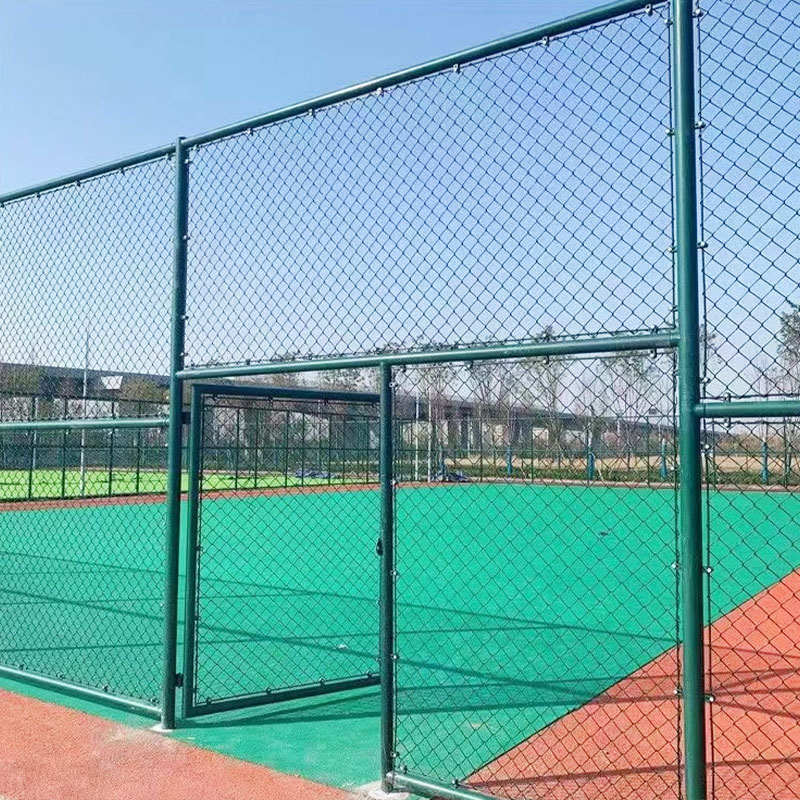
Steel mesh fencing is manufactured in a range of wire gauges, aperture sizes, and surface treatments that directly affect its suitability in flood-prone environments. Choosing the wrong specification is a common and costly error — standard galvanized mesh that performs well in dry conditions can experience accelerated corrosion failure within 18–36 months in regularly inundated or brackish environments.
Wire Gauge and Panel Strength
Standard welded steel mesh fence panels are available in wire diameters ranging from 3mm to 8mm. For flood-adjacent applications, the structural consideration is not just security rating but resistance to hydrostatic load and debris impact during flood events. A panel experiencing fast-moving floodwater carrying debris can face lateral forces that exceed its design load if undersized.
- 3mm–4mm wire: suitable for low-security boundary marking; not recommended in areas with flood debris risk
- 5mm–6mm wire: mid-grade security; acceptable for residential and light commercial flood-adjacent perimeters
- 6mm–8mm wire: heavy-duty; specified for critical infrastructure perimeters, flood retention zone boundaries, and industrial sites with debris flood risk
Surface Treatment Options for Wet and Flood-Prone Environments
Surface treatment is the primary variable determining long-term performance in wet environments. The main options are:
style="border: 1px solid #cccccc; padding: 8px;">Urban infrastructure and amenity areas
Comparison of surface treatment options for steel mesh fence in flood-exposed environments
| Treatment |
Zinc Coating Weight |
Expected Lifespan (flood-adjacent) |
Best For |
| Electro-galvanized |
~30 g/m² |
3–7 years |
Temporary or low-exposure sites |
| Hot-dip galvanized |
60–80 g/m² |
15–25 years |
Standard flood-adjacent commercial use |
| Galfan (Zn-Al alloy) |
255 g/m² typical |
25–40 years |
Coastal, brackish, or high-frequency inundation |
| PVC powder-coated over HDG |
HDG base + 60–80 µm coating |
20–30 years |
For sites subject to repeated flooding, Galfan-coated steel mesh is the technically superior choice, offering corrosion resistance approximately 2–3 times greater than standard hot-dip galvanizing. The zinc-aluminum alloy coating is particularly effective at resisting the electrochemical attack that accelerates in sediment-laden floodwaters.
Post and Foundation Design for Flood-Prone Ground
Post stability during and after flood events is a failure point that is often underestimated. Saturated soil loses significant bearing capacity — some clay soils lose up to 40–60% of their shear strength when fully saturated. Fence posts installed with standard concrete pad footings in flood-prone areas should use deeper pile designs or post-in-post removal systems that allow panels to be lifted clear before major flood events, preventing damage from hydrostatic pressure and debris loading.
Flood Control Boards: How They Work and Where They Fit in a Perimeter System
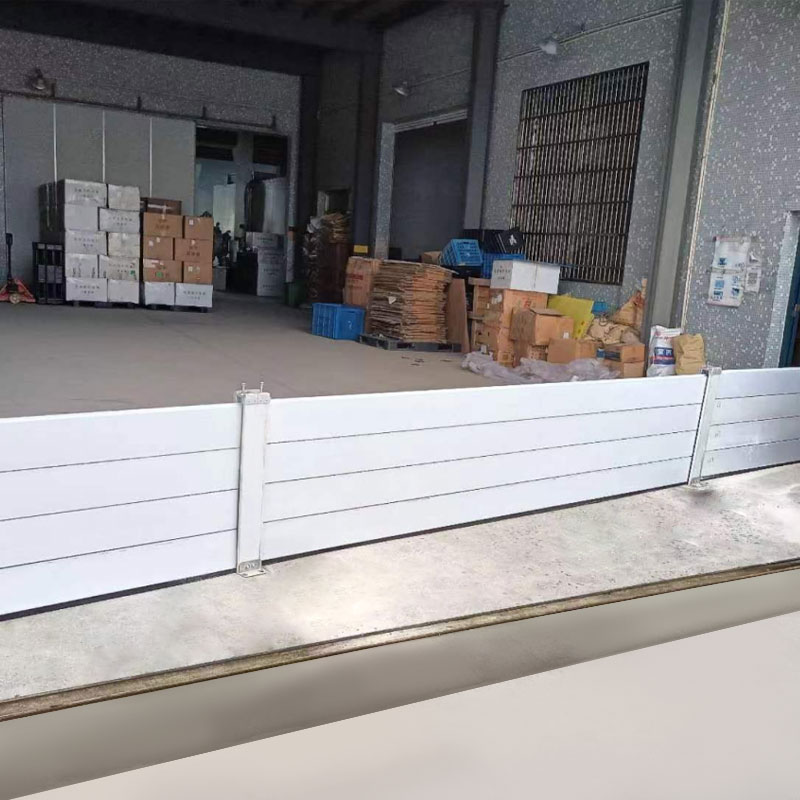
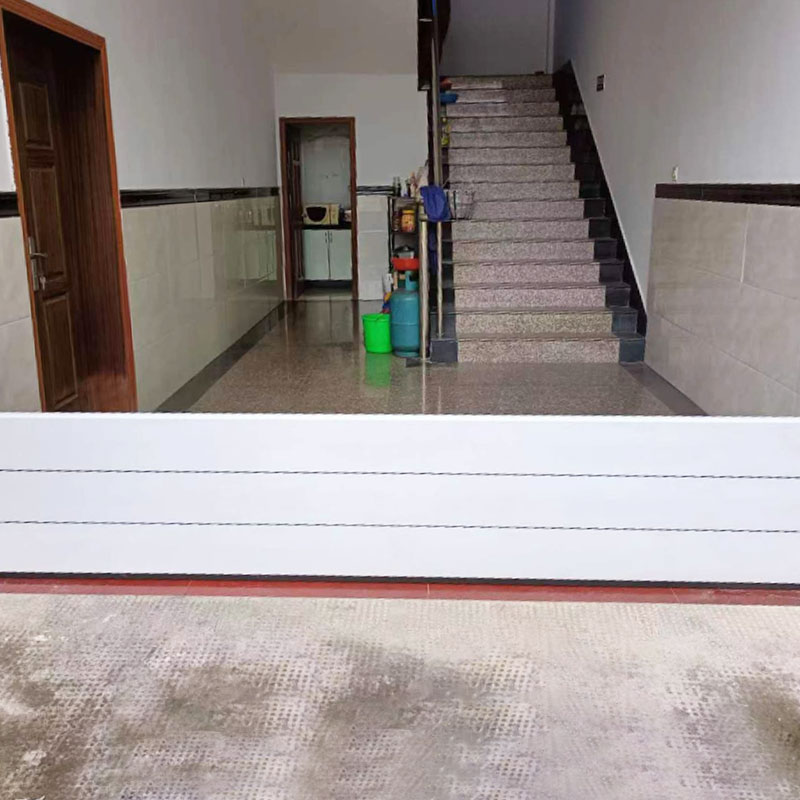
Flood control boards — also referred to as flood barriers, stop boards, or demountable flood panels — are modular, manually or mechanically deployable barriers designed to seal openings, doorways, and low-lying gaps against rising water. Unlike permanent floodwalls or earthen embankments, they are designed for rapid deployment and removal, making them suitable for locations where permanent barriers are impractical or aesthetically unacceptable.
Core Construction and Materials
Flood control boards are manufactured from several material types, each with different performance profiles:
- Aluminum alloy (6061-T6 or 6063): the most widely specified material for commercial and critical infrastructure use; lightweight (approximately 2.7 kg/m²), corrosion-resistant, and capable of spanning 1.2m–3m openings without intermediate supports
- Steel (galvanized or stainless): higher strength-to-cost ratio for wide spans; heavier than aluminum but suitable for industrial deployments where weight is not a handling constraint
- Glass-reinforced plastic (GRP/FRP): used where electromagnetic compatibility or corrosion resistance in chemical environments is required; common in utility substations
- Timber (treated hardwood): traditional stop board material still used in agricultural and rural settings; low cost but limited to low head pressure applications under 0.5m
Rated Head Pressure and Deployment Depth
Head pressure rating is the critical specification for flood control boards and is frequently misunderstood. Head pressure refers to the depth of water the board is designed to resist on one side. A board rated to 1.0m head can withstand 1 metre of standing water pressing against it — but this assumes correct installation in a properly specified guide channel system and adequate substrate for the sealing mechanism.
Most commercial aluminum flood boards are rated between 0.6m and 1.5m head. Higher ratings (up to 3m) are achievable with engineered systems using multiple stacked boards and intermediate support frames, but these require pre-installed guide infrastructure and are less suited to ad-hoc deployment.
Sealing Systems: Where Most Failures Occur
The board itself rarely fails — the sealing interface between the board edge and the guide channel or door frame is where water ingress most commonly occurs. Quality flood control board systems use EPDM rubber or neoprene compression seals that maintain water-tightness under lateral pressure. Inferior seal materials compress permanently after one or two deployments, degrading performance. When evaluating suppliers, always request seal material specifications and ask for independent test results conforming to standards such as BS EN 13564 (anti-flooding devices) or equivalent national standards.
Integrating Steel Mesh Fence and Flood Control Boards in a Single Site Protection Plan
The most effective flood-resilient perimeter designs treat steel mesh fencing and flood control boards as complementary elements of a single system rather than independent procurement decisions. Here is how integration typically works across different site types:
Industrial and Utility Sites
Water treatment plants, electrical substations, and fuel storage facilities typically use heavy-gauge steel mesh fencing (6mm–8mm wire, hot-dip galvanized or Galfan) as the primary perimeter security barrier. Flood control boards are integrated at vehicle entry gates and personnel access points — the two locations where continuous fencing is impossible. In this configuration, the mesh fence handles the linear perimeter while flood boards seal the gaps.
A real example: the UK's Environment Agency guidance for critical water infrastructure specifies a flood defense line that combines permanent perimeter fencing rated to at least LPS 1175 security standards with demountable flood barriers at all entry points rated to a minimum 1-in-100-year flood event, with a 20% freeboard allowance for climate change uplift.
Commercial and Retail Properties
Ground-level retail and commercial premises in flood zones increasingly specify demountable flood boards for storefronts and loading bay entrances, combined with low-profile steel mesh fencing along rear and side boundaries to manage surface water flow direction and prevent debris accumulation against the building structure. The fencing here serves a secondary hydraulic function — channeling water flow away from the primary flood defense line.
Riverside and Coastal Infrastructure
Promenades, riverside parks, and coastal amenity areas use open steel mesh fencing (larger aperture, lighter gauge) primarily for pedestrian safety and boundary demarcation during normal conditions. When flood warnings are issued, these sites deploy temporary or demountable flood board systems at key low points. The mesh fence in this context also serves as a deployment guide — permanent fence posts can double as anchor points for temporary flood barrier systems if this is designed in from the outset.
Key Standards and Compliance Requirements Buyers Should Know
Both steel mesh fencing and flood control boards are subject to national and international standards that define minimum performance requirements. Specifying compliant products is essential not just for regulatory reasons but for insurance validity — many commercial property insurers now require evidence of flood defense compliance as a condition of flood cover.
Relevant standards for steel mesh fencing and flood control boards by region and application
| Standard |
Region |
Applies To |
Key Requirement |
| BS EN 10223-7 |
UK / EU |
Welded steel mesh panels |
Wire diameter, mesh aperture, and weld strength tolerances |
| BS EN ISO 1461 |
UK / EU / international |
Hot-dip galvanized steel |
Minimum zinc coating thickness by material category |
| BS EN 13564 |
UK / EU |
Anti-flooding devices (flood boards) |
Watertightness, structural integrity, and installation performance |
| FM Approvals (FM 2510) |
USA / international |
Flood control barriers |
Performance under sustained hydrostatic load for insurance purposes |
| ASTM A392 / A853 |
USA |
Galvanized steel chain-link / welded wire |
Zinc coating weight and wire tensile strength |
Specifiers should be aware that self-declared compliance without third-party test certification is increasingly unacceptable for insurance and planning approval purposes. Request test reports from accredited laboratories — not just CE declarations of conformity, which can be self-issued by manufacturers.
Common Specification Mistakes and How to Avoid Them
Both product categories suffer from consistent specification errors that result in premature failure, insurance complications, or flood defense performance below what the site requires. The following mistakes appear repeatedly in post-flood damage assessments and engineering reviews:
Underspecifying Fence Corrosion Protection
The most frequent steel mesh fence failure in flood-prone environments is specifying standard electro-galvanized or light hot-dip galvanized product where Galfan or stainless steel is warranted. The cost difference between hot-dip galvanized and Galfan mesh is typically 15–25% per linear metre, but the lifespan difference in brackish or chemically contaminated flood environments can be 10–15 years. Over a 30-year asset life, the Galfan specification almost always delivers better value.
Buying Flood Boards Without Pre-Installing Guide Channels
Flood control boards require guide channels or anchor points that must be installed in advance — ideally during initial construction. Retrofitting guide channels into existing door frames, walls, or road crossings is significantly more expensive and may not achieve the same water-tightness as designed-in systems. A common failure scenario is purchasing demountable flood boards as an emergency measure and discovering during installation that the door frames are not plumb, the threshold is uneven, or the substrate cannot accept the required fixings. Pre-installation survey and guide channel installation should be treated as inseparable from the flood board procurement decision.
Ignoring Deployment Time in Emergency Planning
A flood control board system that cannot be deployed within the available warning time is effectively useless. UK flood warning lead times average 2–4 hours for river flooding and can be as little as 30–60 minutes for surface water events. If a site's flood board system requires 3 hours to deploy and there are only 2 hours of warning, the investment is wasted. Deployment exercises — full drills under realistic conditions — should be conducted at least annually and timed against available warning lead times.
Treating the Fence Line as Impermeable
Steel mesh fencing is inherently permeable — water passes through it freely. It is not a water barrier. Planners who assume that a steel mesh perimeter fence will impede floodwater entry are making a dangerous error. The fence can manage debris and limit post-flood access, but flood control boards are the only element of a conventional perimeter system that can actually stop water. These functions must not be confused in site planning.
Procurement Considerations: Sourcing, Lead Times, and Supplier Evaluation
Steel mesh fencing and flood control boards have different supply chains, lead time profiles, and supplier qualification requirements. Understanding these differences prevents planning failures, particularly for time-sensitive construction programs or post-flood emergency replacements.
Steel Mesh Fence Procurement
- Standard stock items (welded mesh panels in common sizes, hot-dip galvanized) are typically available ex-stock from major distributors; lead times of 5–15 working days for delivery
- Galfan or custom-specification panels are usually manufactured to order; expect lead times of 6–14 weeks from specialist suppliers
- Request material test certificates (EN 10204 3.1 or 3.2) for structural applications; a 3.1 certificate is manufacturer-issued, a 3.2 involves independent inspection
- Galvanizing coating verification: request zinc coating thickness test results per BS EN ISO 1461; do not accept verbal assurances
Flood Control Board Procurement
- Standard single-board aluminum systems (up to 1.2m wide, rated to 0.6m head) are available from stock at most specialist flood defense suppliers; 2–5 day delivery in most markets
- Custom-width or multi-board stacked systems require site survey and engineering sign-off; lead times typically 8–20 weeks depending on complexity
- Always request BS EN 13564 or FM Approvals test data; ask specifically which product model was tested — certificates sometimes cover only a subset of a manufacturer's range
- Factor in guide channel installation cost, which typically adds 30–60% to the board unit price for retrofit applications
- Ask suppliers about seal replacement schedules — EPDM seals typically require inspection every 2–3 years and replacement every 5–10 years depending on deployment frequency
Maintenance Schedules That Protect Your Investment in Both Systems
Both steel mesh fencing and flood control boards are low-maintenance relative to other civil infrastructure, but neither is maintenance-free — particularly in environments subject to repeated inundation, UV exposure, and sediment deposition. Neglecting maintenance is the most common cause of performance failure discovered only when a flood event occurs.
Steel Mesh Fence Maintenance Checklist
- Annual inspection: check for panel distortion (from debris impact or vehicle contact), weld failure at mesh intersections, and post verticality
- Post-flood inspection: immediately after any inundation event, inspect for sediment-accelerated corrosion at ground level, foundation undermining, and panel displacement
- Coating integrity check: look for rust bleed through the zinc coating — this indicates zinc depletion and signals that coating lifespan is near end; plan replacement 2–3 years before visible failure
- Vegetation management: plant growth through mesh accelerates corrosion and retains moisture; clear vegetation from mesh annually
Flood Control Board Maintenance Checklist
- After each deployment: clean boards and guide channels to remove sediment and debris; inspect seals for compression set, cracking, or contamination
- Annual function test: deploy and retract the system to confirm guide channels are clear and fixings are intact
- Guide channel inspection: check for silting, concrete spalling around fixings, or organic growth that could impede deployment
- Storage conditions: boards stored horizontally in damp conditions can develop seal adhesion to board faces — store vertically in dry conditions with boards separated
- Record keeping: log every deployment, inspection finding, and seal replacement; this documentation is increasingly required by insurers for flood damage claims
A well-maintained aluminum flood control board system can remain serviceable for 25–40 years with seal replacements every 7–10 years — making it a genuinely long-term infrastructure investment when properly specified and maintained.

 English
 Español