Understanding the Purpose of a Site Fence Guardrail
The primary function of a site fence guardrail is to establish a secure perimeter, controlling access to a designated area and protecting both people and property within and outside its boundaries. Unlike a simple demarcation line, a guardrail is a physical barrier engineered to withstand certain levels of force and to prevent unauthorized entry. Its design is therefore not merely an aesthetic consideration but a critical component of a site's overall safety management plan. The guardrail serves to keep the public out of potentially hazardous construction zones, industrial areas, or private facilities, thereby reducing the risk of accidents and liability. Simultaneously, it prevents the uncontrolled egress of materials, equipment, or personnel from the site. The effectiveness of this barrier depends on its ability to fulfill these roles under a variety of conditions, which are dictated by the specific environment and activities it encompasses. The design must be a direct response to the identified risks of the location it is meant to secure.
Regulatory Standards and Compliance
The question of whether a site fence guardrail meets safety requirements is fundamentally tied to its adherence to established regulatory standards and building codes. Governmental bodies and industry organizations publish detailed specifications that outline the minimum requirements for fencing and guardrails in different contexts. These regulations often specify criteria for material strength, height, post spacing, and load-bearing capacity. For instance, a standard might mandate that a perimeter fence for a construction site must be a certain minimum height to deter casual climbing. In industrial settings, regulations may focus on the ability of the guardrail to withstand impact from heavy equipment or to prevent falls from elevated platforms. Compliance with these standards is not optional; it is a legal requirement. A design that fails to meet or exceed these baseline specifications is inherently inadequate from a safety perspective. The process of verification involves checking the design plans against the relevant local, national, and industry-specific codes to ensure every aspect, from the gauge of the steel mesh to the depth of the post foundations, is in accordance with the law.
Material Selection and Durability
The choice of materials is a central element in the guardrail's ability to meet safety requirements over its intended service life. The materials must be robust enough to resist environmental degradation and physical attempts at breach. Common materials include galvanized steel, aluminum, and, in some cases, high-strength polymers. Galvanized steel is frequently chosen for its strength and resistance to rust, which is crucial for maintaining structural integrity over many years, especially in outdoor or harsh environments. Aluminum offers corrosion resistance and lighter weight, which can simplify installation, but it may not possess the same tensile strength as steel. The durability of the material directly impacts the long-term safety of the fence. A guardrail that corrodes, cracks, or warps due to exposure to sun, rain, or chemicals will eventually fail to provide an adequate barrier. The design must therefore specify materials that are appropriate for the specific site conditions, whether that means using a higher grade of stainless steel in a coastal area or selecting a UV-resistant coating for a location with intense sun exposure. The longevity of the safety function is dependent on the resilience of its constituent parts.
Structural Integrity and Load Resistance
A site fence wall must be more than a visual deterrent; it must possess the structural integrity to perform as a physical barrier. This involves resisting various types of loads. Wind load is a primary consideration, especially for tall fences or those installed in open areas. The design must account for the maximum expected wind pressure and ensure that the posts, rails, and infill panels can withstand it without bending or collapsing. Impact load is another critical factor, particularly in active industrial or construction sites. The guardrail may need to withstand accidental impacts from moving vehicles, falling debris, or equipment. The design's response to this includes selecting an appropriate post foundation, such as a concrete footing of sufficient depth and diameter, to anchor the system securely. The spacing of the posts is also crucial; closer spacing increases the overall strength of the fence section. The connections between the posts, rails, and any mesh or infill material must be engineered to transfer stress effectively without failure. A guardrail that looks solid but has weak points in its structure will not meet the site's safety requirements when subjected to real-world forces.
| Load Type |
Description |
Design Considerations for Safety |
| Wind Load |
Pressure exerted by wind on the fence surface |
Post depth and strength, rail thickness, secure fastenings, aerodynamic design |
| Impact Load |
Force from a collision with a vehicle or equipment |
Material strength, post foundation, energy-absorbing features, height |
| Concentrated Load |
Force applied at a single point, e.g., from someone leaning or climbing |
Rigidity of infill material, strength of fasteners, overall stiffness of the panel |
| Dead Load |
The weight of the fence structure itself |
Foundation capacity, structural support of the base |
Height and Design for Deterrence
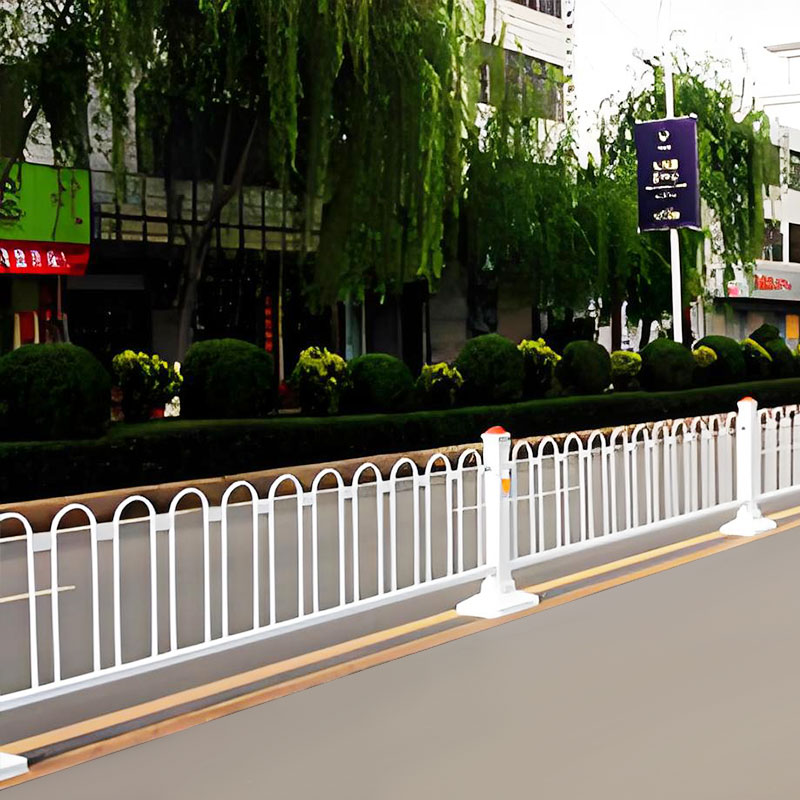
The height of a guardrail is one of its most apparent safety features and is often dictated by the level of security required. A low fence might be suitable for demarcating a boundary in a low-risk area but would be entirely inadequate for preventing access to a dangerous construction site. The required height is determined by a risk assessment of the site. For example, standards for construction sites often mandate a minimum height, such as two meters, to make climbing more difficult and to provide a clear physical barrier. The design of the top of the fence also contributes to its deterrent capability. Features such as curved or extended top sections (often called "good-neighbor" styles) can make it harder to climb over. For high-security applications, additional features like barbed wire or razor wire might be integrated into the design, but these must be implemented in a way that does not create new hazards, such as entanglement risks for authorized personnel. The vertical picket spacing or mesh size is another consideration; it must be small enough to prevent a child from passing through or to stop someone from gaining a foothold for climbing. The overall form of the fence must be designed to prevent easy and unauthorized passage.
Visibility and Integration with Site Operations
A safe site fence guardrail must also be visible and integrated effectively with the site's daily operations. Visibility is important to prevent accidental collisions, especially at night or in low-light conditions. This can be achieved through the use of high-visibility colors, reflective strips, or by integrating lighting systems along the fence line. The placement of the fence is equally important. It must not obstruct sightlines for vehicle operators or pedestrians at crossings and access points. Furthermore, the design must accommodate the operational flow of the site. Gates and access points must be strategically located to allow for the efficient movement of people, vehicles, and materials without compromising security. These gates should be designed to be as secure as the rest of the fence when closed, with robust locking mechanisms. The interface between the fence and other site infrastructure, such as buildings or retaining walls, must be seamless, with no gaps that could be exploited for unauthorized entry. A fence that creates operational bottlenecks or new blind spots may meet technical specifications but still fail to meet the holistic safety requirements of the site.
Addressing Specific Site Hazards
The ultimate test of a fence design is its ability to mitigate the specific hazards present at a particular site. A generic fence design may not be suitable for a location with unique risks. For example, a site that handles fine, powdery materials might require a site fence wall with solid panels or a very fine mesh to prevent the material from being blown off-site and creating a nuisance or environmental issue. In a location with a high risk of flooding, the design must account for hydrostatic pressure against the fence panels and ensure the foundations will not be undermined. If the site is in an area with heavy snowfall, the fence must be able to handle the weight and pressure of accumulated snow. For sites near railways or roads, the fence may need to be designed to absorb the shock wave from passing heavy vehicles. A thorough risk assessment is the starting point for the design process, identifying these specific hazards. The guardrail's design is then tailored to address each one, ensuring that it provides protection against the actual dangers present, rather than just conforming to a generic standard.
Maintenance and Long-Term Safety Assurance
A guardrail's ability to meet safety requirements is not a static condition; it degrades over time without proper maintenance. The design of the system should facilitate easy inspection and upkeep. This includes using materials that are easy to clean and repair, and designing components that are replaceable without having to dismantle the entire fence. A regular maintenance schedule is a crucial part of the safety plan. This schedule should include periodic inspections for signs of corrosion, physical damage, loose fasteners, or settlement of the posts. Any identified issues must be addressed promptly to restore the fence to its original safety standard. The design documentation should provide guidance on maintenance requirements and inspection intervals. A well-designed fence that is poorly maintained will eventually become a safety liability. Therefore, the overall design concept must extend beyond the initial installation to encompass the entire lifecycle of the guardrail, ensuring it remains a reliable and effective safety barrier for as long as it is needed.

 English
 Español