The Essential Role of Modern Perimeter Protection Barriers
A structural metal flood protection board serves as an engineered, high-tensile modular barrier system designed to intercept and redirect hydrodynamic water forces, safeguarding critical infrastructure, commercial perimeters, and subterranean access points from catastrophic inundation. Unlike traditional sandbagging, which relies on high-volume manual labor, slow deployment times, and porous, single-use materials, a dedicated flood control board provides an impenetrable, reusable hydrostatic shield. These systems normalize civil defense measures by turning vulnerable entryways into sealed structural bulkheads during extreme meteorological events.
As global weather patterns yield increasingly erratic, high-precipitation storms and rapid flash floods, urban environments face unprecedented challenges. Densely populated municipalities are highly vulnerable due to the abundance of non-porous surfaces like asphalt and concrete, which accelerate water accumulation and overload municipal storm water management systems. Within this context, the deployment of a robust metal flood protection board shifts a property's risk posture from reactive mitigation to proactive, highly reliable structural defense.
These modular planking systems are engineered to withstand not only static water height but also dynamic surge impacts and debris strikes. Because they are positioned across vital ingress channels—such as underground parking garage ramps, subway entrances, storefront portals, and warehouse loading docks—their mechanical performance under stress is vital. A breakdown in a single component of a perimeter system can cause catastrophic flooding within seconds, meaning that the engineering standards, metallurgical choices, and seal designs of these assemblies require absolute precision.
Classification of Flood Control Board Configurations
Flood protection systems are categorized by their installation style, structural frame interfaces, and structural mechanics. Selecting the appropriate setup depends on the architectural constraints of the building and the anticipated flood depth elevations.
Stackable Modular Plank Systems
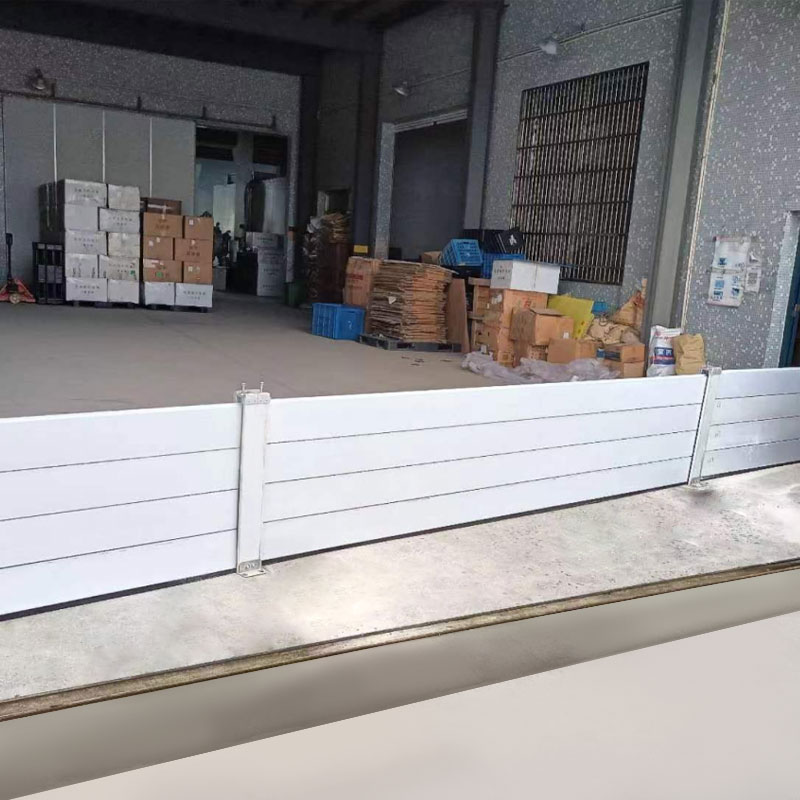
Stackable modular planks are the most versatile and widely deployed variants in commercial civil engineering. This system features individual, extruded aluminum or structural steel slats that slide down a pair of permanently or temporarily fixed vertical side tracks. This configuration allows personnel to adjust the defense height in real-time, stacking planks up to a maximum rated height of 4.5 meters based on current meteorological updates.
Each individual plank incorporates a male-female interlocking groove pattern along its horizontal edge, embedded with high-density elastomeric seals. When the top compression clamps are engaged, the entire stack behaves as a monolithic structural wall. The lightweight nature of these individual segments enables rapid deployment by a two-person team without requiring heavy mechanical cranes or rigging machinery.
Flip-Up and Automatic Hydraulic Barriers
Automatic hydraulic panels are recessed directly into the roadway or walkway surface flush with the ground during standard operating conditions. When triggered by integrated float sensors or an automated building management system, hydraulic pistons or natural buoyancy forces lift the heavy metal flood protection board into a vertical orientation, forming a barrier within 60 to 90 seconds of activation.
This configuration provides continuous protection for facilities that operate 24/7 without requiring manual staging or storage yards for loose planks. However, automatic systems require extensive subterranean concrete civil works, integrated drainage pumps to clear debris from the mechanical recess chamber, and uninterruptible backup power supplies (UPS) to guarantee operation during regional power grid failures.
Removable Pivot Gate Panels
Pivot gate configurations function similarly to heavy-duty security doors but are optimized for full hydrostatic sealing. The metal panel hangs on reinforced structural hinges bolted directly into structural concrete columns. During dry periods, the gate remains pinned open against the adjacent architectural wall, allowing unobstructed pedestrian and vehicular traffic flow.
When a storm surge warning is declared, a single operator swings the gate shut and secures heavy-duty perimeter wedge clamps into place. This mechanical design is highly effective for narrow entryways, utility substations, and emergency exit portals where deployment times must be compressed down to mere seconds.
Metallurgical Engineering and Material Properties
The intense mechanical demands imposed by fast-moving flood waters—such as exposure to corrosive municipal runoff, sewage contaminants, industrial chemicals, and abrasive sediment loads—require highly specialized materials for the fabrication of flood control board components. The chosen alloys directly dictate the system's structural deflection profile and service life.
Structural Aluminum Alloy (typically 6061-T6 or 6063-T6) is the leading material choice for modular stackable planks. The T6 tempering process provides an ultimate tensile strength of at least 290 MPa (Megapascals), allowing the barriers to resist significant bending moments without permanently deforming. Aluminum features an inherent thin oxide layer that provides natural resistance to atmospheric oxidation, and its low density ensures that rapid deployment teams can mobilize components during short emergency warning windows.
For large-span industrial barriers or areas prone to heavy debris impacts, such as logs, vehicles, or shipping containers, Structural Carbon Steel (ASTM A36) or Austenitic Stainless Steel (Grade 304 or 316) is required. A steel metal flood protection board exhibits a much higher modulus of elasticity, allowing it to withstand severe dynamic impacts without structural tearing. When using carbon steel, the components must undergo hot-dip galvanization according to standard specifications, applying a minimum zinc coating thickness of 85 microns to prevent rust and corrosion in marine or industrial environments.
The interface hardware, including ground anchors, compression bolts, and hinge pins, must consist of Grade 316 stainless steel. This choice eliminates the risk of galvanic corrosion, which occurs when aluminum panels contact carbon steel fastners in the presence of highly conductive, contaminated floodwaters.
Hydrodynamic Forces and Structural Mechanics
When a flood control board intercepts rising water, it must resist a complex combination of physical forces. Civil engineers calculate these impacts to determine the required thickness of the metal profiles, the depth of the anchoring bolts, and the spacing of the vertical support pillars.
The primary load is hydrostatic pressure, which increases linearly with water depth. The pressure exert is calculated as the product of fluid density, gravitational acceleration, and water height, creating a triangular load distribution that peaks at the base of the barrier. For a water height of 2 meters, the hydrostatic force acting at the base reaches approximately 19.6 kN per square meter (Kilonewtons), requiring rigid grounding anchors to prevent overturning or sliding.
Beyond static forces, the barrier must withstand hydrodynamic forces caused by moving water currents and wave action. When a flood wave hits a vertical wall, its kinetic energy transfers into a localized force spike known as dynamic stagnation pressure. Additionally, floating debris can strike the barrier, creating sudden point loads. High-performance metal flood protection board assemblies undergo rigorous testing, including a standardized impact trial where a 450-kilogram mass is launched at the barrier at a speed of 3.3 meters per second to verify that the system can survive impact without structural breach.
To manage these forces over long spans, engineers introduce intermediate support posts. These vertical steel struts anchor directly into subsurface structural concrete sockets, splitting long spans into manageable widths (typically between 2 to 3 meters per section). This optimization keeps the internal bending stress of the aluminum planks within safe limits.
Performance Comparison: Metal Barriers vs. Legacy Flood Defenses
The choice of flood defense technology significantly impacts the operational lifecycle costs, deployment speed, and structural reliability of a facility's disaster response plan. Comparing the performance of modern engineered metal planks against old-fashioned methods highlights the industrial advantages of these systems.
| Defense System Type |
Deployment Time (per 10m Span) |
Leakage Rate Metric |
Debris Impact Resistance |
Storage Lifecycle & Reusability |
| Extruded Aluminum Board |
10 - 15 Minutes (2 operators) |
Near-Zero (< 0.05 L/h per meter) |
High (Elastic deformation recovery) |
25+ Years (Indefinite reusability) |
| Reinforced Galvanized Steel Panel |
15 - 20 Minutes (Requires tools) |
Zero Leakage (Compression sealed) |
Maximum (Resists severe logs/vehicles) |
20+ Years (Requires rust checks) |
| Standard Sandbag Wall |
4 - 5 Hours (Large labor crew) |
High continuous seepage |
Low (Bags tear, compromising wall) |
Single-use (Contaminated hazardous waste) |
Operational metrics comparing modern aluminum and steel flood control boards against traditional sandbagging defenses.
The matrix confirms that engineered metal systems offer much higher structural reliability than sandbags. While sandbags require massive logistics, fill material, and labor during an emergency, an aluminum or steel barrier can be deployed quickly by a small onsite security or maintenance team, allowing facilities to protect assets even during sudden flash floods.
Sealing Systems and Elastomeric Material Science
The overall effectiveness of a metal flood protection board depends heavily on its sealing gaskets. The most robust structural metal panel will still fail to protect a facility if its perimeter joints allow water to seep through under pressure. This requires advanced elastomeric engineering to ensure watertight seals along all horizontal and vertical seams.
The primary compound used for flood barrier gaskets is EPDM (Ethylene Propylene Diene Monomer) rubber or closed-cell Neoprene. EPDM features exceptional resistance to UV degradation, ozone exposure, and extreme temperature fluctuations, preventing the seals from becoming brittle or cracking while stored in hot warehouses or cold outdoor lockboxes. This material maintains its compression set profile, ensuring it springs back to its original shape even after being compressed under high clamping forces for days.
The sealing system relies on a dual-stage compression process:
- Hydrostatic Self-Sealing Action: The profile of the horizontal inter-plank gasket is often shaped like a lip or a hollow 'D'. As water rises against the exterior face of the barrier, the fluid pressure forces the flexible rubber lip tighter into the interlocking metal channel, using the water's own energy to improve the seal.
- Mechanical Top-Down Compression: At the top of each vertical track, installers tighten heavy-duty downward locking screws or eccentric cam-levers. This mechanical action forces the entire stack of planks downward, compressing the bottom seal against the concrete floor slab to stop water from seeping underneath the barrier.
</li style="list-style-type: disc; list-style-position: inside;">
To achieve a tight seal at the base, the ground surface must be flat and smooth. Concrete surfaces are typically ground smooth or fitted with a recessed stainless steel sill plate, ensuring the bottom EPDM gasket can form a continuous seal free from gaps caused by pebbles or rough pavement joints.
Step-by-Step Emergency Deployment Protocols
During a flood emergency, clear deployment procedures are vital. Having an organized, step-by-step assembly workflow ensures that building maintenance crews can secure the perimeter quickly and safely under high-stress conditions.
Phase 1: Channel Cleaning and Prep Work
Clear all dirt, gravel, leaves, and debris from the base of the flood channel and the inside of the vertical side tracks. Any trapped debris can damage the EPDM gaskets or prevent the first plank from resting flush against the ground, which can cause significant leakage. Use a stiff wire brush or high-pressure air canister to ensure all mounting surfaces are clean.
Phase 2: Positioning and Inserting the Base Planks
Retrieve the primary bottom plank—distinguished by its thick, flat ground seal—from the storage rack. Orient the plank so its smooth face points toward the oncoming water, then slide it carefully into the vertical guide tracks. Press the plank down evenly across its span to verify that it sits completely flat against the floor plate.
Phase 3: Stacking and Interlocking Modular Planks
Slide the remaining intermediate metal flood protection board sections into the tracks one by one. Take care to ensure that the male-female tongue and groove joints interlock correctly between each layer. Personnel should avoid dropping the planks down the tracks forcefully, as this can pinch or tear the embedded EPDM rubber gaskets.
Phase 4: Engaging Compression Mechanisms and Final Inspection
Install the top compression clamps into the guide tracks above the top plank. Tighten the locking screws or activate the cam levers to apply uniform downward pressure across the entire stack. Perform a final visual inspection along all seams to confirm the gaskets are evenly compressed and that no gaps remain, finalizing the secure perimeter defense.
Maintenance Protocols and Structural Lifespan Management
Like any critical emergency asset, a flood control board system requires regular maintenance and storage care to ensure it performs reliably when a major storm hits. Neglecting these checks can lead to degraded seals or seized fastners, which can compromise the system during an emergency deployment.
Facilities should implement a semi-annual maintenance schedule. This process involves unpacking all stored metal planks, cleaning them with fresh water to remove accumulated dust, and examining the aluminum or steel surfaces for physical damage, deep scratches, or structural warping. All stainless steel threads, compression bolts, and cam mechanisms should be treated with a high-quality marine-grade dry silicone lubricant to prevent binding and ensure smooth operation during rapid staging.
Special care must be given to the elastomeric seals. Personnel should check all EPDM gaskets for dry rot, inelastic hardening, or gouges caused by handling. If a gasket shows a permanent compression set—failing to return to its original shape after being released—it must be replaced immediately. Applying a thin coat of talcum powder or specialized rubber protectant before long-term storage helps maintain elasticity and prevents the gaskets from sticking together inside the storage containers.
Finally, deployment drills should be conducted at least once a year. These dry-run exercises train new facility maintenance staff on setup protocols, confirm that all specialized tools and components are present, and verify that the local ground conditions have not changed due to building settlement or repaving work, ensuring the facility remains fully prepared for future flood events.

 English
 Español