
 English
 Español
Anti-corrosion wood flower box guardrail
The antiseptic wood flower box guardrail combines the natural beauty of wood wit...
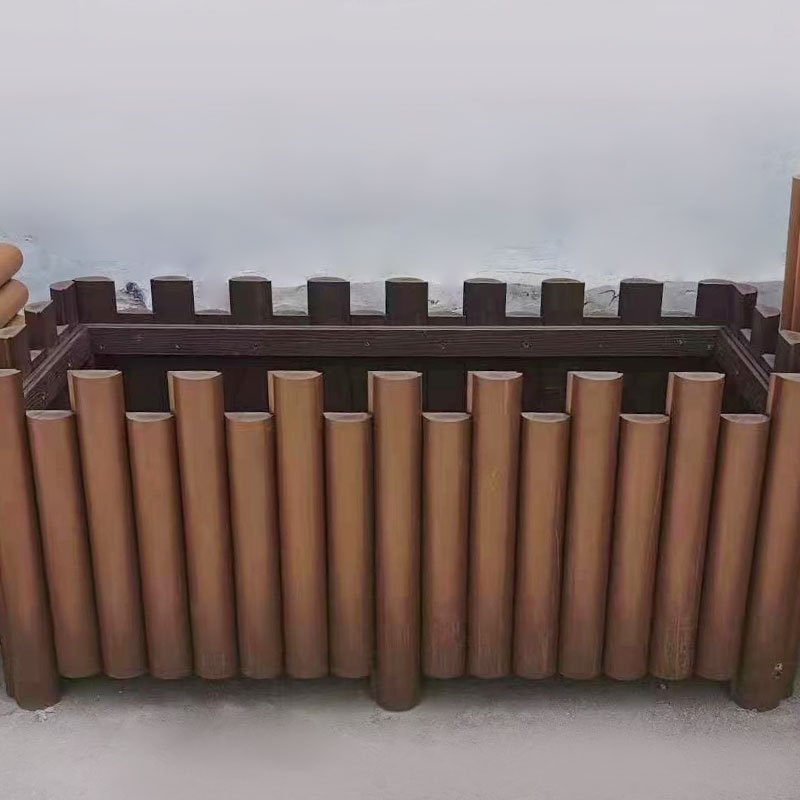
The antiseptic wood flower box guardrail combines the natural beauty of wood wit...
Traffic Guardrail is a protective facility designed to protect the safety of road users. It is widely used in various roads, bridges and traffic facilities. It effectively reduces the risk of vehicles deviating from the driving track through physical barriers, reduces the damage caused by collision accidents, and ensures the smoothness and safety of road traffic.
This series of products focuses on high strength, durability and flexibility, and adopts advanced design concepts and materials. It can effectively withstand the impact of vehicle collisions and reduce the severity of accidents. These guardrail products are carefully designed to adapt to different environments and road conditions, provide a variety of protection solutions, and ensure road safety in different scenarios.
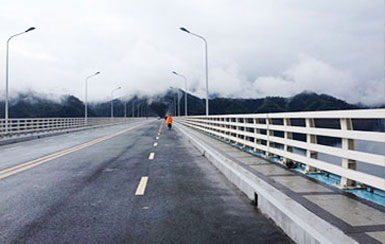
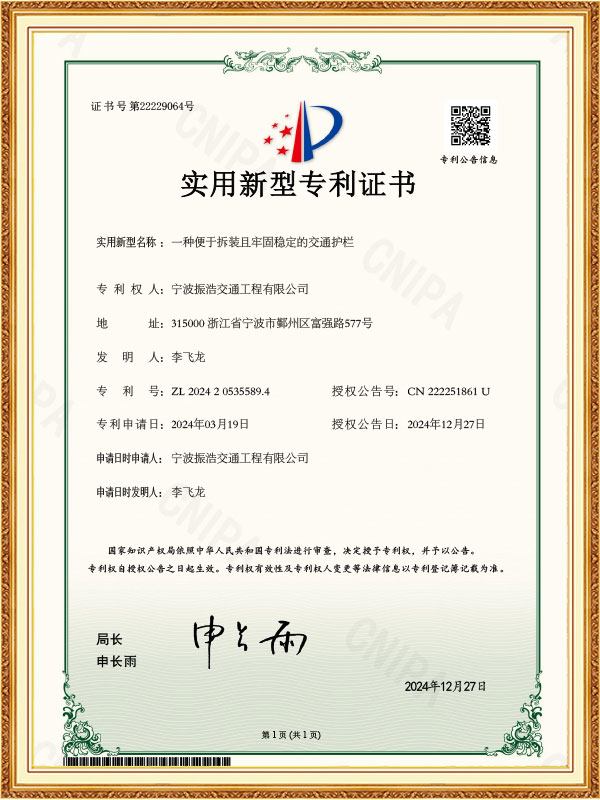
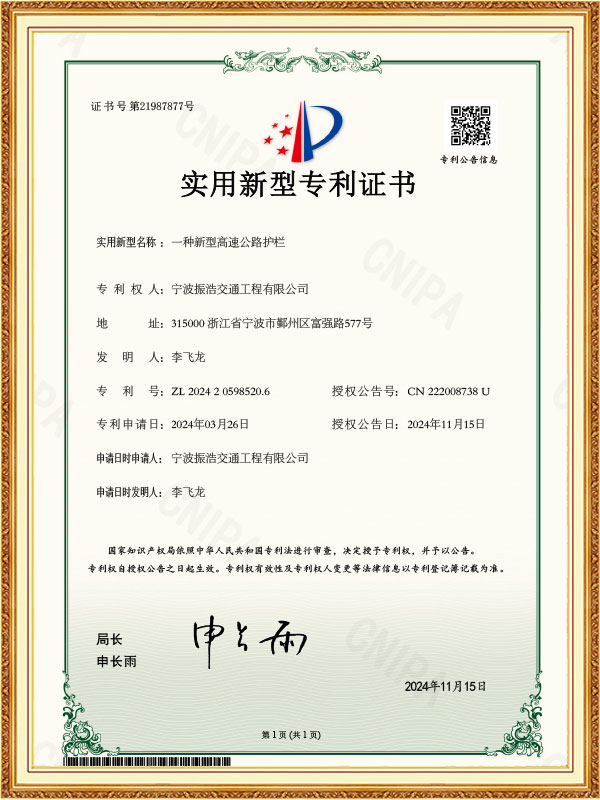
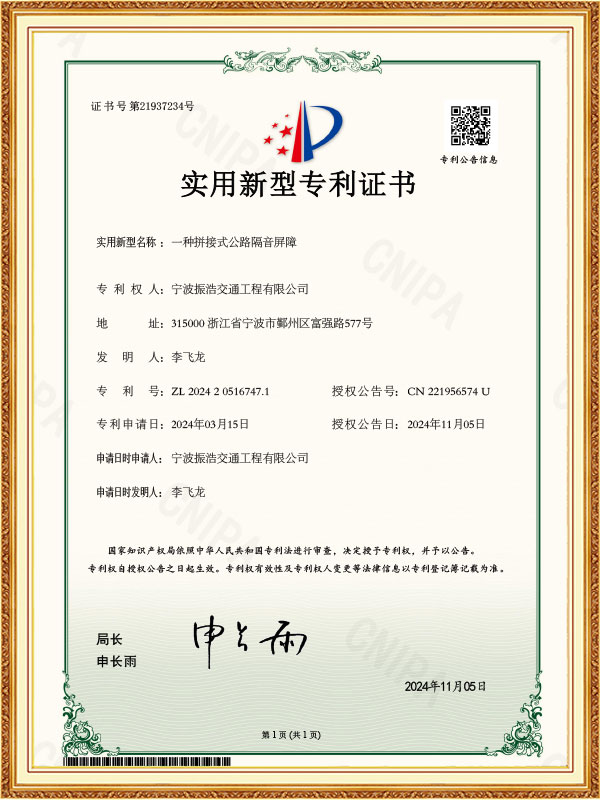
Zhenxuan Traffic Engineering Co., Ltd. is a large manufacturers of professional responsible for the design, production and sales of a series of guard rails, guard rails and high-speed soundproofing screens. As China Traffic Guardrails Suppliers and Traffic guardrail Suppliers, the company relies on high-speed guard board production equipment, the production quality meets national standards, and the product design is carried out using a computer...
A metal flood protection board is the most robust and reliable solution for preventing floodwater intrusion through doorways, entrances, and low-level openings. Unlike sandbags or plastic barriers, a properly engineered metal flood protection board system provides a demonstrable seal against water...
READ MORESpecifying a zinc steel fence guardrail provides municipal developers, industrial civil engineers, and premium estate managers with the ultimate equilibrium of structural yield strength, permanent electrochemical corrosion protection, and minimal long-term maintenance overhead. While alternative pe...
READ MORELearning how to build a wire mesh fence comes down to four fundamentals: set posts on a straight, correctly spaced line, unroll the mesh with steady tension, anchor it to every post without slack, and secure the ends with tension bars so the whole run stays tight for years instead of months. Mapp...
READ MORESelecting the right steel mesh fence manufacturer depends on balancing geometric rigidity against localized atmospheric corrosion. High-security infrastructure requires manufacturers utilizing heavy 4-gauge to 8-gauge wire with a minimum tensile strength of 500 MPa, combined with advanced Zinc-Alu...
READ MOREBeyond Separation: The Traffic Guardrail System as a Sophisticated, Energy-Absorbing Safety Asset
The Foundational Role of the Traffic Guardrail in Modern Infrastructure
The Traffic Guardrail, often referred to broadly as a Traffic Barrier or Road Traffic Barrier, is a non-negotiable component of highway and arterial road infrastructure worldwide. Its presence transcends simple visual delineation; it is an engineered safety system designed under rigorous standards, such as those set by the Manual for Assessing Safety Hardware (MASH), to manage kinetic energy during a vehicle collision. The primary goal is not to stop the vehicle abruptly, but to smoothly redirect it away from hazardous roadside features or opposing lanes of traffic, thereby protecting occupants and maintaining road order.
Core Engineering Principles: Absorption, Redirection, and Deceleration
The effectiveness of any Traffic Guardrail is measured by its capacity for Crash Mitigation—a process that involves three synchronized actions, all essential for occupant protection.
Energy Absorption: The guardrail, particularly the semi-rigid and flexible types, absorbs the vehicle's kinetic energy through controlled deformation. This controlled yielding is critical because it extends the collision duration, which in turn reduces the severity of the G-forces imposed on the vehicle’s occupants, a key factor in preventing severe injury.
Vehicle Redirection: The profile and structural integrity of the guardrail work to change the vehicle's trajectory after impact. A well-designed system ensures the vehicle leaves the barrier at a shallow, manageable angle. This is vital in preventing hazardous outcomes such as the vehicle vaulting over the barrier, snagging on the barrier structure (a high risk factor), or rebounding sharply back into the main traffic flow, which could trigger a catastrophic secondary accident.
Impact Deceleration Control: The system manages the rate at which the vehicle decelerates. Extreme, sudden deceleration is highly dangerous and increases the risk of serious injury. By allowing controlled, progressive deformation, the guardrail maintains vehicle integrity and occupant ride-down safety, ensuring collision forces remain within established safe thresholds.
Classification of Traffic Barriers: Matching Rigidity to Application
The selection of a Traffic Barrier system is a critical engineering decision based on the required protection level, the available lateral space (or deflection zone), and the type of hazard being protected against. Barriers are categorized by their structural rigidity:
Rigid Barrier: These are typically reinforced concrete structures, such as Jersey barriers or New Jersey profile barriers. They are characterized by virtually zero lateral deflection upon impact. They are essential in highly constrained environments like bridge decks, tunnel approaches, or central medians where space is so limited that no barrier movement can be tolerated. Their robust structure provides exceptionally High Load Bearing Capacity and high impact resistance, and their Service Life is often measured in decades, leading to extremely low maintenance costs.
Semi-Rigid Barrier: The quintessential example is the Waveform Guardrail (W-Beam or Thrie-Beam). This system relies on steel posts and beams designed to deflect a moderate, controlled amount. They are the industry standard for long stretches of major highways and primary roads. The slight deflection and controlled yield absorb significant energy, providing a softer impact than a rigid wall while maintaining reliable redirection. They offer a strong balance of protection, cost-effectiveness, and repairability.
Flexible Barrier: These systems, primarily cable barriers or wire rope safety barriers, exhibit the greatest degree of lateral deformation capability. They are best used in roadside areas with ample buffer space (or clear zones) and relatively flat terrain. They provide the lowest impact forces on occupants due to the long run-out distance and progressive absorption, but they require the most repair after a severe impact due to the wide area of influence.
System Integration and Failure Prevention
A Traffic Guardrail system is a chain of interconnected components, meaning its performance is only as strong as its weakest point. Therefore, proper integration of all components is essential to ensure maximum functionality and safety:
Terminal End Treatments: These specialized components are mandatory at the beginning of any guardrail run. They are specifically engineered to manage end-on impacts, either by safely flaring away from the travel path or by crushing and absorbing the vehicle's kinetic energy (blunt end systems). Their purpose is critical: to prevent the guardrail end from acting as a spear, which is a major cause of fatality in collisions.
Transitions: These are highly rigid, specialized sections used to link one type of barrier to another—for instance, connecting a semi-rigid steel guardrail to a rigid concrete bridge parapet. They ensure a smooth, contiguous transition in rigidity, preventing the vehicle from snagging on the abrupt change in structural resistance.
The correct choice and installation of the entire integrated system—from the anchor bolt and post spacing to the crucial end treatment—is what transforms a length of steel or concrete into a reliable, energy-managing safety asset with a long Service Life.
Manufacturing Excellence: Achieving Reliability Through Precision, National Standards, and Leading Chinese Manufacturing
Waveform Guardrails: The Standard-Bearer of Semi-Rigid Protection and Manufacturing Quality
Waveform Guardrails have cemented their status as the prevailing choice for highway protection systems due to their mature design, consistent performance, and structural modularity. These guardrails, manufactured as W-Beam (two waves) or Thrie-Beam (three waves) profiles, are designed for high-volume manufacturing, ease of repair, and reliable field performance. The distinct wave profile is itself engineered to present a broad, smooth contact surface to the colliding vehicle, minimizing dangerous pocketing and maximizing the redirective force. The reliability of this system on the road is directly traceable to the manufacturing quality back at the Waveform Guardrails Factory. A world-class product must meet exacting requirements for steel chemistry, dimensional accuracy, and corrosion protection.
Precision and Quality Assurance: CAD, Metallurgy, and High-Speed Production
Zhenhao Traffic Engineering Co., Ltd., operating as a specialized Waveform Guardrails Factory, exemplifies the dedication to industrial precision required for road safety components. The company’s commitment to quality begins with strict adherence to rigorous National Standards for every product produced.
Advanced Equipment and Standards: This quality is ensured through the utilization of High-Speed Guard Board Production Equipment, which enables the precise forming, punching, and cutting of thousands of guardrail panels daily. The equipment maintains the tight dimensional tolerances required for seamless and safe field installation, a crucial aspect often overlooked.
Precision Engineering: In the initial development, Zhenhao Traffic Engineering Co., Ltd. leverages Computer-Aided Design (CAD) to simulate and adjust product specifications. This digital pre-visualization allows engineers to confirm that the final product structure optimally meets required MASH or equivalent national crash test criteria, adapting parameters like hole spacing and beam thickness before any material is cut. This proactive approach minimizes manufacturing errors and maximizes the chance of achieving a long Service Life.
Material Science: The materials themselves are carefully selected. Guardrails require a specific grade of high-tensile steel to ensure they possess the necessary yield strength to deform under impact without fracturing prematurely, balancing flexibility with structural strength.
Corrosion Protection and Longevity: Maximizing Service Life
This process involves submerging the fabricated steel components into a bath of molten zinc, forming a metallurgically bonded coating that provides superior High Wear Resistance against corrosion. Some manufacturers, particularly for high-visibility or extreme environment projects, may also apply an additional powder coating over the galvanized layer. This dual-layer protection enhances aesthetic appearance and provides redundant defense, which is particularly important for ensuring the Traffic Guardrail remains visually effective for Visual Guidance over many years. Consistent anti-corrosion treatment ensures the structural integrity required for Crash Mitigation is preserved throughout the asset's lifespan.
The Commitment of China Traffic Barrier Manufacturers
Ningbo Zhenhao Traffic Engineering Co., Ltd. stands as a large and professional entity within the competitive landscape of China Traffic Barrier Manufacturers. The company takes on the critical responsibility for the design, production, and sales of an extensive range of road safety solutions, including all series of guardrails, specialized Traffic Barriers, and high-speed soundproofing screens.
This company's comprehensive strength lies in three core areas:
Product Portfolio and Expertise: Offering full-spectrum solutions that cover everything from rigid concrete barriers to semi-rigid steel systems and specialty noise abatement screens, providing complete safety infrastructure solutions.
Engineering Integrity and Compliance: Ensuring that all products delivered meet the strict performance criteria outlined in relevant National Standards, a commitment that guarantees reliability for end-users and engineering firms.
Scale and Efficiency: Employing efficient High-Speed Guard Board Production Equipment to handle large-scale domestic and international project orders efficiently and cost-effectively, maintaining stringent quality management throughout the manufacturing process.
By integrating the structural integrity ensured by Zhenhao Traffic Engineering's precision manufacturing with the broad oversight and extensive product range provided by companies like Ningbo Zhenhao Traffic Engineering Co., Ltd., the industry consistently delivers dependable, high-quality Traffic Guardrail systems that actively contribute to safer and more orderly road networks worldwide. The enduring commitment to engineering standards, robust manufacturing, and long-term Service Life is the fundamental value proposition offered by these leading industry partners.
Contact Us
Add:No. 577 Fuqiang Road, Panhuo Street, Yinzhou District, Ningbo City, Zhejiang Province
Email: [email protected]
Telephone: +86-18058271903
Phone: +86 0571-28284189

Zhenxuan Traffic Engineering Co., Ltd. is a large manufacturers of professional responsible for the design, production and sales of a series of guard rails, guard rails and high-speed soundproofing screens.
PRODUCT
case
 Custom Traffic Guardrails Factory
+86-18058271903